

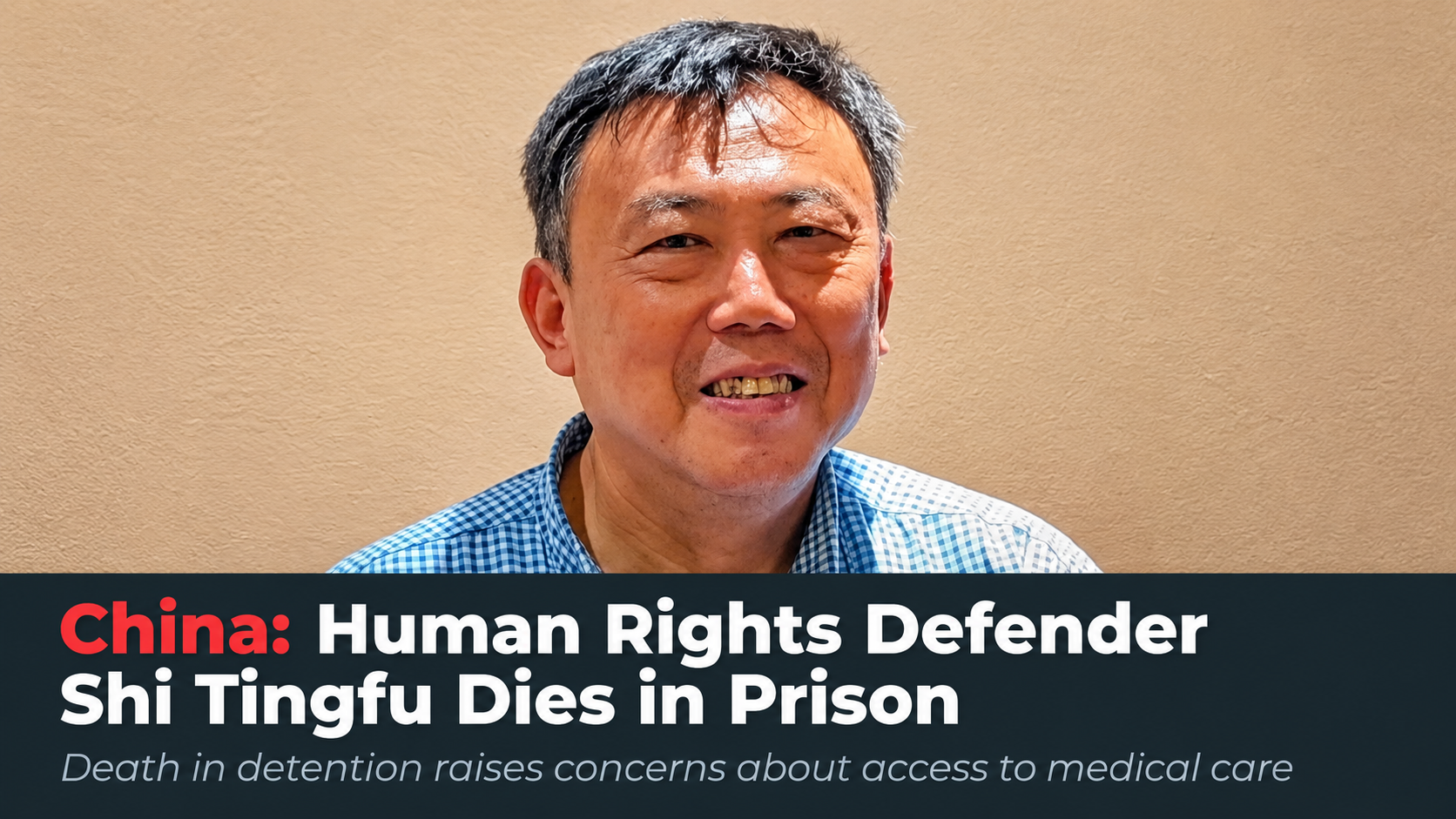
Chinese human-rights defender Shi Tingfu has died in a Xinjiang prison less than four months before his expected release, raising fresh questions about medical neglect, opaque prison conditions and Beijing’s treatment of political prisoners. His reported death came as President Xi Jinping visited Washington for high-level talks with President Donald Trump focused on trade, technology, Taiwan and global security while human-rights concerns appeared to receive far less public attention.
The 67-year-old activist was serving a three-year prison sentence for “picking quarrels and provoking trouble,” a vague accusation repeatedly used by Chinese authorities against dissidents, journalists and rights defenders. According to Chinese Human Rights Defenders (CHRD), Shahe Prison authorities in the Xinjiang Uyghur Autonomous Region told Shi’s family on September 22 that he had suffered a heart attack. The family was reportedly informed only after his death and no independent medical assessment has been made public.
A death before expected release
Shi Tingfu was due to leave prison in January 2027. His sudden death has therefore intensified demands for transparency from Chinese authorities, including the release of his medical records, details of any treatment he received and access for his family to independently verify the cause of death.
According to AsiaNews, Shi had multiple health problems, including hypertension, pneumonia and asthma. When a lawyer met him at the Aral City Detention Centre in April 2024, the lawyer reportedly observed that Shi’s already fragile health had deteriorated in custody. Yet relatives who saw him shortly before his death said he appeared to be in good health and had not complained of serious physical discomfort.
The reported “heart attack” must therefore be treated as the prison authorities’ explanation, not as a cause independently confirmed by public medical documentation. Vision Times reported that no public death certificate, autopsy result, hospital record or independent medical finding had been released as of September 23.
Why Shi Tingfu was imprisoned
Shi, a former electronics-factory worker from Nanjing, had supported the pro-democracy demonstrations of 1989 and continued to advocate online for freedom, democratic rights and accountability. He reportedly organised activities commemorating the Tiananmen Square crackdown, criticised official corruption, supported democratic development in Taiwan and joined campaigns for persecuted lawyers and the families of prisoners of conscience.
His final imprisonment began in January 2024 after he allegedly passed information to overseas media about fruit farmers in Aral, Xinjiang. The farmers were protesting against the Xinjiang Production and Construction Corps, the powerful state-linked paramilitary body that plays a major role in agriculture, settlement and economic administration in the region.
According to CHRD, Shi was initially accused of “spreading and promoting terrorism and extremism,” and authorities denied him prompt access to legal counsel. He was later convicted of “picking quarrels and provoking trouble,” an offence CHRD says was used in more than half of the prisoners-of-conscience torture cases it examined.
Medical neglect and China’s prison system
Shi’s death followed the September 16 publication of CHRD’s report, Swept Under the Rug: Systemic Failures to End Torture in the People’s Republic of China. Based on 209 alleged torture cases between 2016 and 2025, the organisation found that 35 percent involved denial of adequate medical care the most frequently recorded form of torture in its dataset. It documented 16 deaths in detention apparently linked to such neglect and found no evidence that officials were prosecuted or disciplined in those cases.
CHRD stressed that it cannot definitively establish whether inadequate medical care caused Shi’s death. However, it called on China to disclose the full circumstances, provide his medical records, reveal what treatment he requested and received, allow access to his body and permit an independent investigation. Those are basic safeguards not political demands and their absence fuels legitimate suspicion.
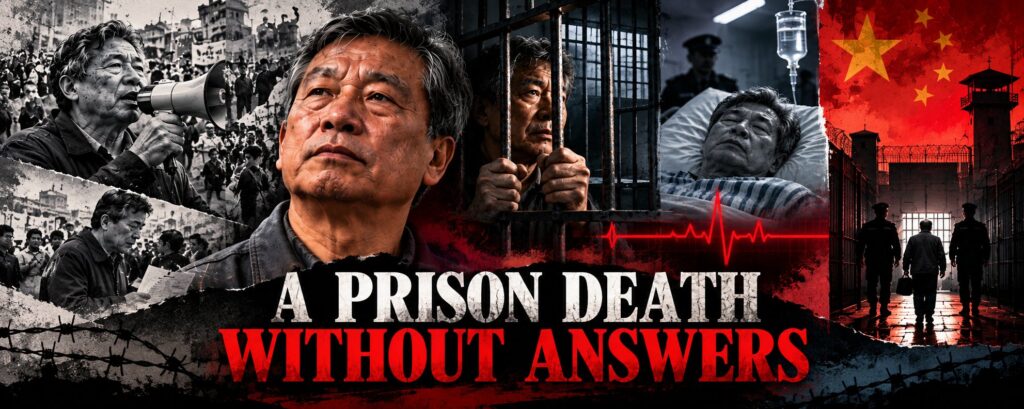
Xinjiang and the silence in Washington
Shi died in Xinjiang, where Uyghurs and other Turkic Muslim communities have faced mass detention, intensive surveillance, forced-labour allegations and extensive restrictions on religion and culture. Radio Free Asia reported that Uyghur and Tibetan advocacy groups urged Trump to press Xi on these human-rights concerns during the Washington summit, warning that economic and geopolitical negotiations should not eclipse abuses against ethnic minorities and political prisoners.
Reuters reported that Xi’s September 23–25 state visit centred on stabilising relations strained by trade, artificial intelligence, Taiwan and Iran. But Shi Tingfu’s death demonstrates the cost of treating human rights as a secondary issue.
China should immediately allow an impartial investigation into Shi Tingfu’s death. Without medical transparency, accountability for prison officials and genuine protection for detainees, Beijing’s assurances about rule of law will remain impossible to trust.