

What makes a hairdresser exchange scissors for a rifle and seek freedom in somebody else’s war? For some Uyghurs who left China’s Xinjiang region, Syria became an unlikely refuge and a battlefield where they hoped to prepare for a struggle back home. They helped overthrow Bashar al-Assad, yet that victory did not deliver the homeland they imagined.
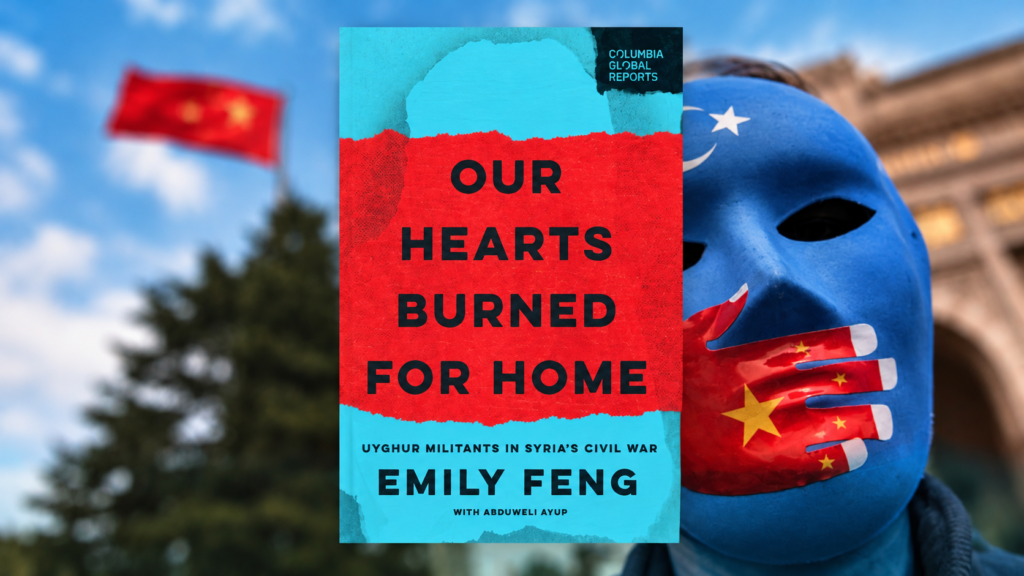
Emily Feng’s Our Hearts Burned for Home: Uyghur Militants in Syria’s Civil War explores this contradiction. Her reporting also exposes a darker side of China’s security policies: restrictions that helped drive some Uyghurs abroad, while making a safe return deeply uncertain.
Uyghur Fighters: From Xinjiang to Syria’s Front Lines
Feng, a longtime China reporter, travelled to northern Syria with Uyghur linguist and writer Abduweli Ayup in summer 2025. They interviewed approximately five dozen fighters and relatives, visiting homes, workplaces and schools to understand how exile had transformed their lives.
Their reporting describes a Uyghur community of roughly 20,000 people in Syria. According to Ruth Ingram’s review in The New Arab, around 4,000 took up arms. These are reported estimates, not a formal population count.
Some had been farmers, shopkeepers or hairdressers. Their journeys followed different routes, shaped by Chinese crackdowns, chance and, for some, a desire for revenge. Syria offered military experience they hoped eventually to use in Xinjiang, which they call East Turkestan.
Their destination was Syria. Their imagined future remained elsewhere.
The Chinese Policies Behind the Uyghur Exodus
Understanding those departures requires looking beyond the battlefield.
China presents its Xinjiang policies as measures against terrorism and extremism. However, the UN Human Rights Office’s 2022 assessment found that the legal framework relied on vague, broad definitions that gave officials extensive discretion. It warned that protected religious and cultural behaviour could become grounds for punishment.
The assessment concluded that arbitrary and discriminatory detention, alongside wider restrictions on fundamental rights, might constitute international crimes, particularly crimes against humanity.
These findings help explain why some families saw departure as an escape rather than simply migration. Feng describes people abandoning businesses, relatives and familiar lives because conditions under Chinese rule had become intolerable to them. Their experiences differed, but the loss of security at home connects their stories.
Uyghur Fighters: Fighting for One Country, Dreaming of Another
In northern Syria, Uyghur families established schools, businesses and community institutions. Fighters developed military skills and became part of the coalition that toppled Assad in December 2024.
But this is not a simple liberation story.
Feng acknowledges the controversy surrounding Islamist militant associations and the concerns of Syrian communities living alongside foreign fighters. Some Uyghurs also fear that militancy damages their wider community by reinforcing Beijing’s portrayal of Uyghur identity and dissent as security threats.
Explaining repression does not excuse militant violence. Equally, the actions of several thousand fighters cannot justify treating an entire ethnic community as suspect.
The book’s strongest insight lies in that uncomfortable space: people can suffer injustice without every choice they subsequently make becoming defensible.
Why Returning Home Is Not Simple for Uyghurs
It would be inaccurate to claim that one Chinese law universally bans Uyghurs from returning. The central problem is whether they can return safely.
The UN assessment identified passport confiscation powers under China’s Counterterrorism Law and warned that broadly defined offences could produce lengthy prison sentences, including for protected conduct. It urged authorities to enable travel and family reunification without reprisals.
For fighters, potential prosecution adds another layer. But accountability for specific crimes must remain distinct from punishment based on ethnicity, religion or overseas connections. The UN also cautioned countries against forced returns where people face serious human-rights risks.
When Exile Becomes a Uyghur Childhood
Feng’s reporting reveals another divide: some Uyghur children in Syria want a Syrian future, while adults continue dreaming of Xinjiang. Exile is becoming the children’s home.
That is the lasting tragedy: surviving abroad does not restore what was lost. A meaningful homeland must offer more than permission to enter. It must offer the freedom to live without fear.