

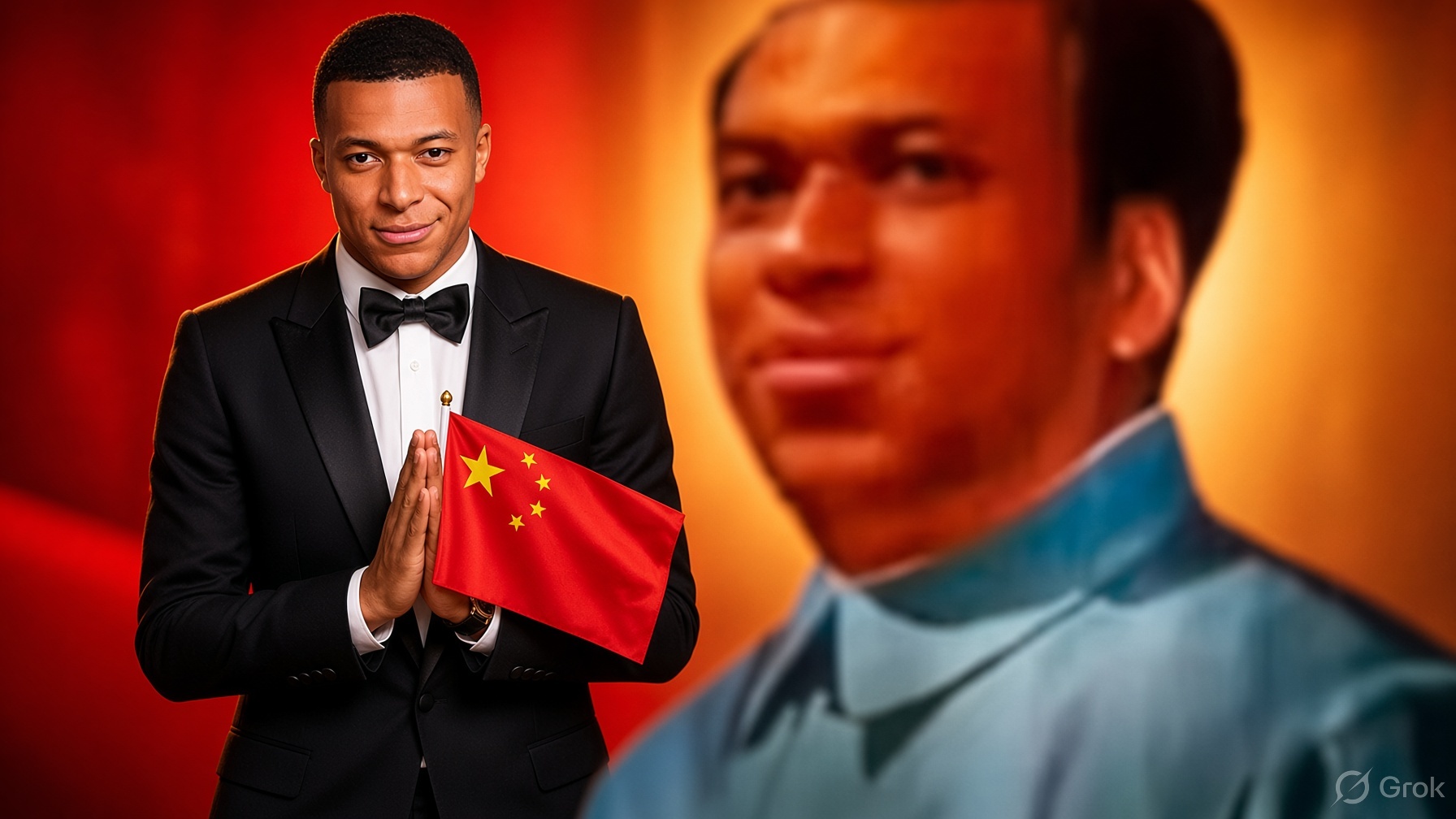
A passing joke about Mao Zedong has become a warning to international sport: China’s market comes with political conditions. On 27 October, French football star Kylian Mbappé apologised in three languages after apparently describing Mao as a dictator. Dongpeng, Mengniu and Milkground ended their commercial partnerships with him. China Media Group suspended La Liga broadcasts. The consequences reached beyond one player to clubs, businesses and Chinese supporters. What began as a remark about an internet meme became a demonstration of economic pressure over political speech. Chinese audiences have every right to criticise Mbappé. But when state broadcasting institutions restrict an entire competition, the issue is no longer simply hurt feelings. It is the use of market access to enforce political boundaries beyond China’s borders.
A Historical Leader Beyond Criticism?
Mbappé’s comment concerned a doctored image placing his face on another person. He described the figure as “some guy” he thought was “a Chinese dictator.” He did not explicitly name Mao in the quoted remark, but the apparent reference triggered the backlash.
“My comment was ill-judged,” Mbappé said, acknowledging hurt among Chinese audiences. La Liga also apologised while explaining that his personal remarks did not represent the competition.
Yet respecting Chinese people is not the same as protecting Mao’s reputation. Treating criticism of a political leader as an insult to an entire population collapses that distinction. It leaves little room for historical disagreement and makes foreign public figures answerable to political sensitivities they did not create.
Commercial Pressure Sends a Wider Warning
Dongpeng, Mengniu and Milkground announced the termination of their partnerships in similarly worded statements opposing behaviour that hurt “national sentiment”.
Private companies can select their ambassadors. The evidence does not establish that officials ordered these withdrawals. But their combined effect is unmistakable, an athlete faces immediate financial punishment for a remark about a former leader.
That creates an incentive extending beyond Mbappé. Other athletes and sponsors can see the possible cost of controversial speech. Self-censorship becomes commercially attractive even without an explicit government instruction.
State Television Turns Anger into Punishment
The clearest institutional escalation came from China Media Group, which oversees CCTV. It suspended Spanish league coverage and removed advertisements featuring Mbappé. AFP reported that the broadcasting decision preceded his apology.
The Chinese Football Association also protested to Real Madrid and demanded public apologies from the player and club.
These actions cannot be explained away as ordinary consumer dissatisfaction. State-linked bodies used their positions to widen the consequences of an individual comment. Chinese supporters lost access to coverage because a foreign footballer crossed a political line.
The available reporting does not prove centrally directed coordination across every organisation. It does establish public participation by institutions with power over football’s access to Chinese audiences.
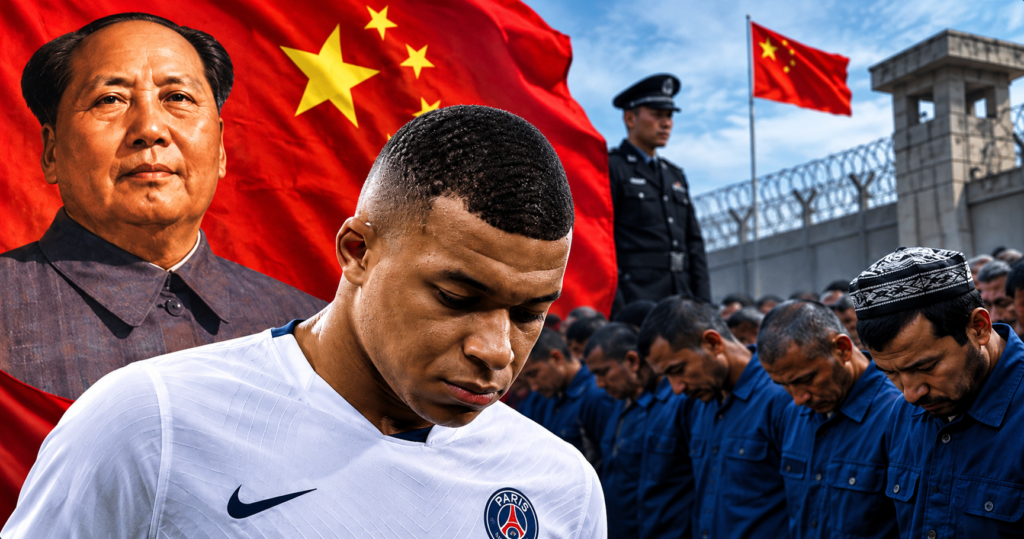
Football Must Not Reward This Model
Withholding broadcasts pressures clubs and partners that had no responsibility for the remark. It turns access to viewers into leverage and makes an entire competition bear the cost of one player’s speech.
International leagues should not confuse cultural respect with submission to political demands. Chinese people are not a single political voice and no government should be allowed to define their dignity solely through loyalty to a historical leader.
Mbappé may choose to apologise. But football’s institutions must ask what repeated concessions encourage. If commercial access can be threatened whenever political sensitivities are offended, the boundaries will remain uncertain and the pressure to stay silent will grow.
China’s response deserves criticism precisely because it went beyond criticism. It translated political offence into institutional punishment. Respect can coexist with disagreement. A market that demands silence as its entry fee offers something very different.