

Canada’s decision to shut down Hikvision’s Canadian operations has renewed concerns over Chinese surveillance technology, data security and the protection of sensitive government and defence facilities. Norway faces related questions about the risks posed by Chinese technology near critical infrastructure.
A security camera is designed to watch the world outside. But what happens when the technology itself becomes a national security concern? That question moved to the centre of Canada’s security debate in June 2025, when the government ordered Chinese surveillance company Hikvision to wind up its Canadian operations. The decision followed a national security review that considered information provided by Canadian intelligence and security agencies.
The move sent a clear message: surveillance equipment is not simply a commercial product when its use could affect national security. Cameras installed in public buildings, government offices and sensitive locations can collect valuable information about people, movements and daily operations. If connected systems are vulnerable to unauthorised access, the risks may extend far beyond privacy.
Canada Takes Action Against Hikvision
On June 27, 2025, Canadian Industry Minister Mélanie Joly announced that Hikvision Canada Inc. had been ordered to close its business following a review under the Investment Canada Act. The government said the company’s continued operations would be harmful to national security.
Ottawa also announced measures to prevent federal departments, agencies and Crown corporations from purchasing or using Hikvision equipment, while reviewing government properties to address the use of existing products. However, the decision did not automatically prohibit every privately owned Hikvision camera in Canada. The company challenged the order, arguing that it lacked a factual basis and was unfair.
The government has not publicly disclosed the specific intelligence behind its decision. That leaves important questions unanswered, including the precise vulnerabilities identified and the evidence used to assess the risk. Nevertheless, the order marked a significant step in Canada’s approach to foreign surveillance technology.
Why Chinese Surveillance Technology Raises Concerns
Hikvision is one of the world’s largest manufacturers of video surveillance equipment. Its cameras and related systems are used in a wide range of settings, from commercial buildings to public infrastructure.
The central security concern is not that every camera made in China is necessarily spying on its users. It is whether the equipment, its software, remote connections and data-handling arrangements could create opportunities for unauthorised access or intelligence collection.
Connected cameras can reveal more than images. Depending on their configuration and network access, surveillance systems may expose information about staff movements, security routines, building layouts and the operation of sensitive facilities. A compromised device could become an entry point into a wider network.
Canada’s wider cyber threat assessment has identified China as a major cyber threat, including through espionage targeting government networks and officials. These broader concerns help explain why governments are examining the security implications of technology suppliers, although they do not establish that Hikvision itself accessed Canadian government data.
The Uyghur Human Rights Dimension
Hikvision has also faced international criticism over the use of its technology in Xinjiang, the region known to Uyghurs as East Turkistan. Human rights organisations and foreign lawmakers have raised concerns about surveillance systems used in the monitoring and repression of Uyghurs and other predominantly Muslim communities.
The controversy has added a human rights dimension to the debate over surveillance equipment. Critics argue that technology companies should be held accountable when their products contribute to systems of mass surveillance or abuses against vulnerable populations.
However, Canada’s public announcement of the 2025 order did not specifically identify Xinjiang or Uyghur surveillance as the reason for its decision. The government cited national security following its review, while the company rejected the allegations of unfair treatment.
Norway’s Defence Security Concerns
Canada is not alone in examining the risks associated with Chinese technology. Norway has also debated the use of Chinese-made surveillance equipment in public buildings and locations linked to critical infrastructure.
Norwegian parliamentary discussions have highlighted concerns about Hikvision and another Chinese surveillance manufacturer, Dahua. In a written response published in January 2023, Norway’s government said the security risk depends on where the equipment is used and how the systems are configured. It also acknowledged that Chinese law gives authorities extensive powers to require cooperation from companies and individuals on intelligence matters.
Norway’s 2024–2025 national security policy reporting has separately warned about Chinese intelligence activity, including interest in the Arctic, Norwegian technology and critical infrastructure. The government has stressed that cooperation with Chinese businesses must be assessed against the country’s security environment.
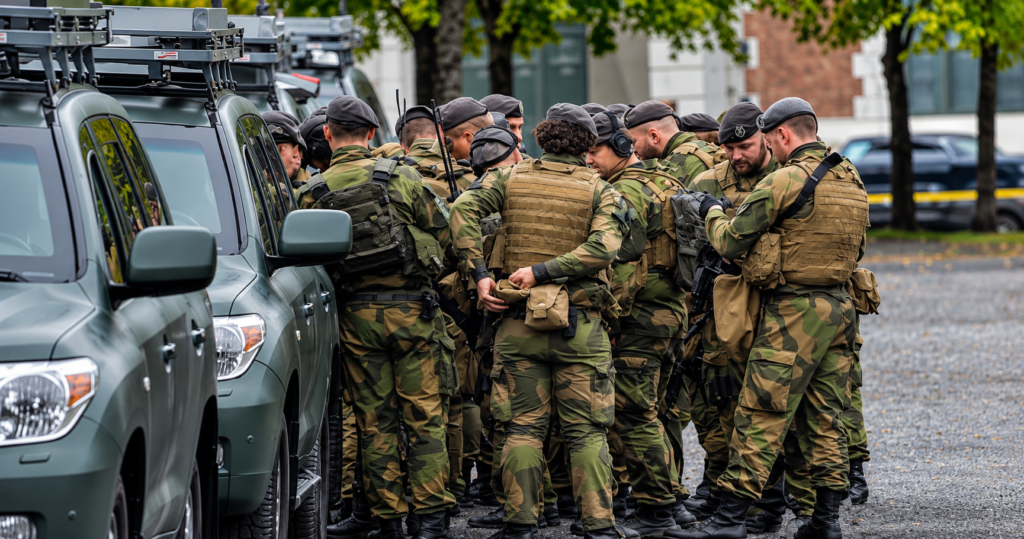
These warnings are particularly relevant to defence facilities, military logistics, ports, energy installations and communications networks. Surveillance equipment positioned near such locations could potentially reveal security routines or movements if the data were accessed by an unauthorised party. That is a risk to assess, not proof that a particular camera has been used for espionage.
A Wider Warning for Western Governments
Canada’s action against Hikvision and Norway’s debate over Chinese technology point to a common challenge: governments must understand who supplies their surveillance systems, where the data travels and who can access it.
The issue extends beyond cameras to network equipment, cloud services and other connected devices. Security reviews, independent testing, strict access controls and the replacement of equipment where risks cannot be adequately managed are among the measures governments can consider. The larger lesson is that national security cannot depend solely on reacting after a threat has been confirmed. It also requires identifying weaknesses before they are exploited.
For Canada and Norway, the challenge is to balance technological needs with the protection of sensitive information, public institutions and defence infrastructure. In an increasingly connected world, the devices watching sensitive locations must also be watched closely.