
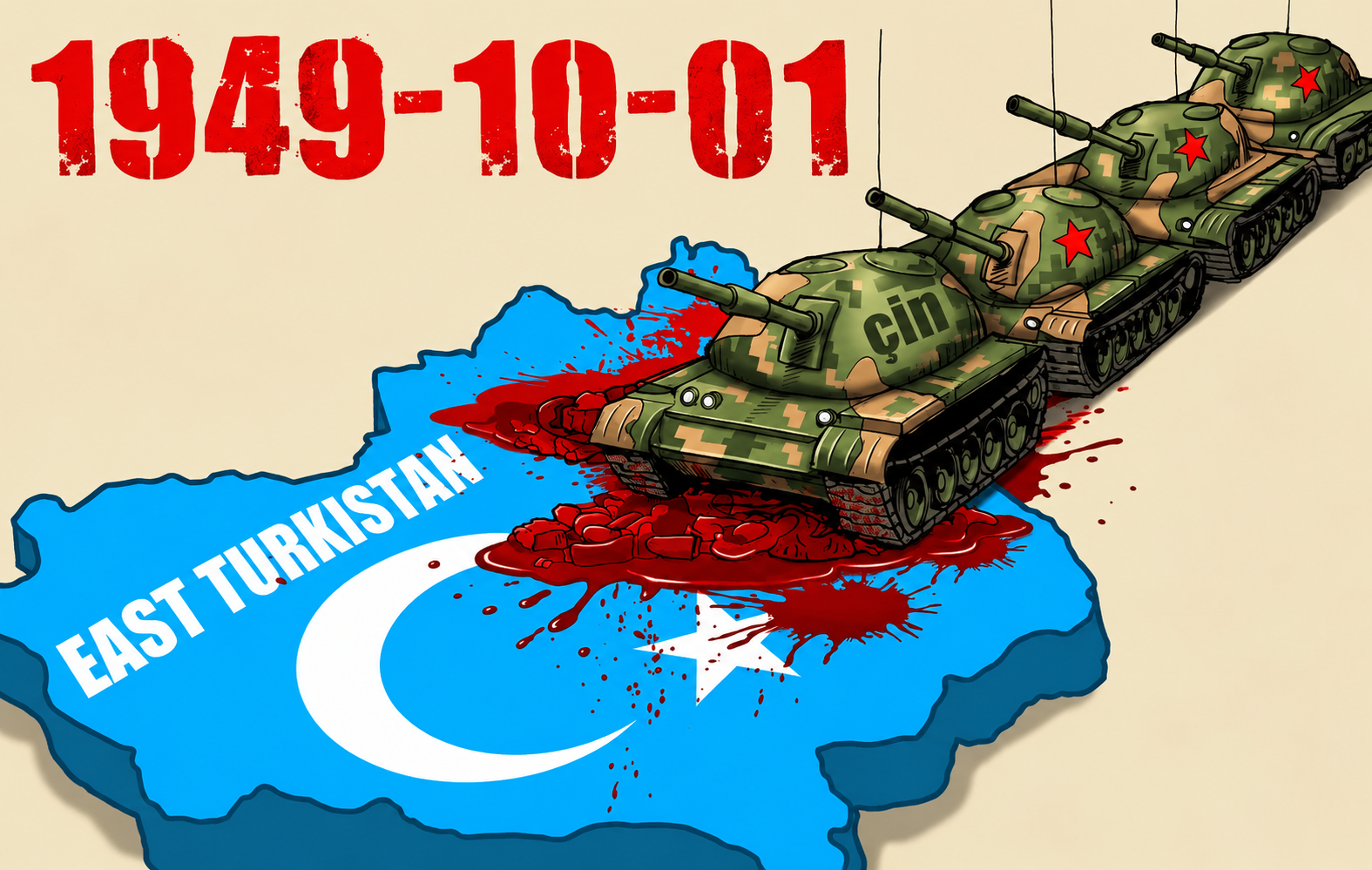
For Beijing, 1 October is a day of flags, ceremony and national celebration. For many Uyghurs, it is a day of mourning. Seventy-seven years after the founding of the People’s Republic of China, Uyghur advocates say their homeland remains under Chinese rule without the autonomy, religious freedom or political voice Beijing promised. The signboard says “Xinjiang Uyghur Autonomous Region.” Critics say the autonomy exists only in name.
A Promise That Became a Signboard
In late 1949, the People’s Liberation Army entered the territory many Uyghurs call East Turkistan. Only weeks earlier, leaders of the East Turkistan Republic, founded in Ghulja in 1944, died in a plane crash while travelling to Beijing for talks. The circumstances remain disputed.
On 1 October 1955, Beijing created the Xinjiang Uyghur Autonomous Region. The title suggested that Uyghurs would have control over language, faith and local affairs. Uyghur advocates say that promise was never honoured. The Communist Party appoints the people who hold real power. A Uyghur official may hold a senior government post, but the Party secretary appointed by Beijing remains in charge.
The Center for Uyghur Studies says Uyghurs have become refugees in their own homeland and prisoners deprived of religious freedom. Its executive director, Abdulhakim Idris, calls autonomy a political mask hiding a system of control
Uyghur Demography and the Bingtuan
In 1953, Han Chinese reportedly made up about 6 percent of Xinjiang’s population. China’s 2020 census puts the Han share at 42.24 percent, or more than 10.9 million people. Uyghurs make up 44.96 percent, or about 11.6 million people.
Uyghur advocates link this change to state-directed migration and the Xinjiang Production and Construction Corps, known as the Bingtuan. Set up in 1954, it runs farms, companies, towns and security structures. China describes it as a source of development, border security and poverty reduction. Critics see it as a tool for changing the population balance and strengthening Beijing’s control.
Language, Religion and Family Life
Uyghur identity is carried through language, faith and family. Rights groups say all three have faced deep pressure. Uyghur-language education has been reduced in favour of Mandarin. Boarding-school policies have separated children from their families and communities. Critics say this weakens the passing of language, culture and religious knowledge to future generations.
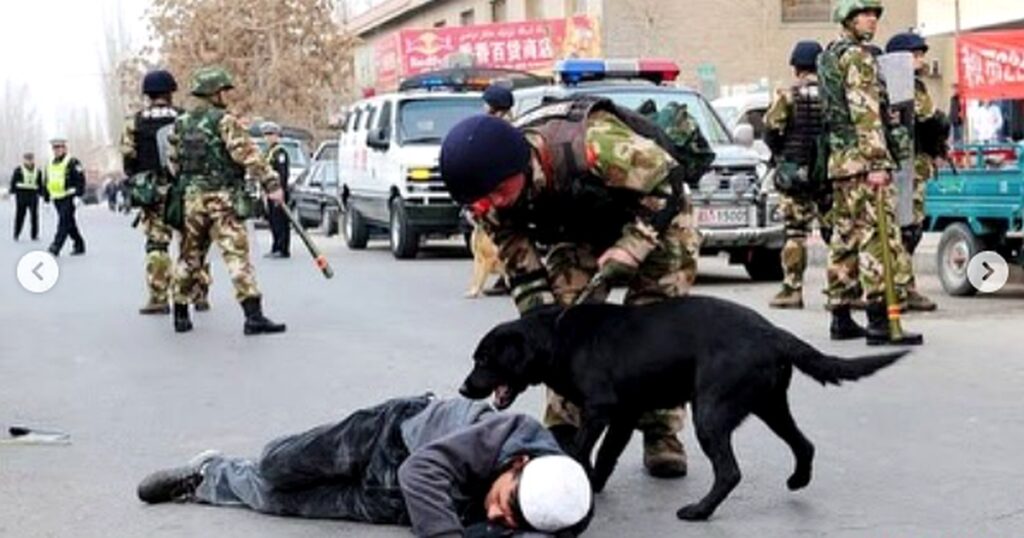
Rights groups also report mosques altered or demolished, cemeteries levelled and religious teaching tightly controlled. Fasting, prayer and teaching the Quran have at times been treated as signs of “extremism,” according to Uyghur groups and outside researchers. China denies repression. It says it protects lawful religious activity while addressing terrorism and extremism.
Camps and the Ethnic Unity Law
Since 2017, researchers, governments and rights organisations have reported that large numbers of Uyghurs and other Turkic Muslims were placed in detention facilities which Beijing described as vocational education and training centres. Estimates differ. Minority Rights Group cites an estimate that around one million Uyghurs were interned or imprisoned during the wider security campaign
On 1 July 2026, China’s Ethnic Unity and Progress Promotion Law entered into force. Beijing says it promotes equality, common prosperity and unity among all ethnic groups. China’s official explanation Amnesty International says the law risks deepening forced assimilation. It warns that its broad language on ethnic unity can be used against people accused of dividing the nation.
Autonomy Needs Real Choice
China says Xinjiang is stable and prosperous because of its security and development policies. It says jobs, infrastructure and public services have improved life for every ethnic group. These claims should be judged fairly.
But development does not replace freedom. Roads and factories cannot compensate for the loss of language, faith, family connection or the right to speak openly. Autonomy means more than a title on a government building. It means communities have a real role in decisions shaping their lives.
After 77 years, the Uyghur question is simple: what does autonomy mean if the Party decides the language children learn, the faith communities may practice and the identity people may express? Until China allows independent access, protects Uyghur culture and ends policies that treat difference as a threat, “autonomy” will remain a signboard covering repression.