

Fleeing China does not make a Uyghur safe. In Germany, exiles can still be watched, threatened and pressured, and Beijing often does it through relatives left behind. In August 2026, Germany’s domestic intelligence agency (BfV) named China, Russia and Iran as major actors in transnational repression. The warning matters because it comes from the German state, not only from activists. A person can live safely in Munich or Berlin and still be controlled through a parent, sibling or child in Xinjiang. This is the core of the problem: China has made fear portable, and Germany’s protection is still too weak.
What German Intelligence Said About Uyghur Targets
The BfV said Chinese activity targets Uyghurs, Tibetans, Falun Gong practitioners and supporters of Hong Kong and Taiwan. The Chinese leadership uses intelligence services and other actors working on its behalf to watch and scare critics abroad. The agency’s warning also covers anyone who flees an authoritarian state, who may keep facing surveillance and threats after arriving in Germany.
Uyghur Families Used as Hostages
Pressure on relatives is Beijing’s strongest tool. Reports say that in 2021 the German government told lawmakers that Chinese security officials repeatedly contacted Uyghurs in Germany for information on the diaspora. Some were offered benefits for relatives in China, and those who refused were threatened. This is the reporting from the Epoch Times article you shared, and I could not check it independently.
The Human Rights Foundation says that since 2016 Beijing has run a campaign against Uyghurs abroad, using informants and pressing host countries to help watch, detain and send people back. One 2026 compilation counts 1,546 cases of relatives held after an exile spoke out. This helps explain why many exiles never report what happens to them.
A Global Uyghur Campaign, not a Local One
Freedom House calls China’s campaign the most sophisticated, global and comprehensive in the world. Its 2025 report logged 126 new incidents of physical transnational repression that year, bringing its total to 1,375 cases since 2014. A study by the Friedrich Naumann Foundation says the system mixes state bodies with groups that look independent. It adds that German law does not clearly cover harassment carried out for a foreign government by non-state actors.
Surveillance technology adds to the fear. The World Uyghur Congress says Hikvision and Dahua cameras, tied to surveillance in Xinjiang, are spreading across Germany. It says Uyghurs are losing trust in state protection.
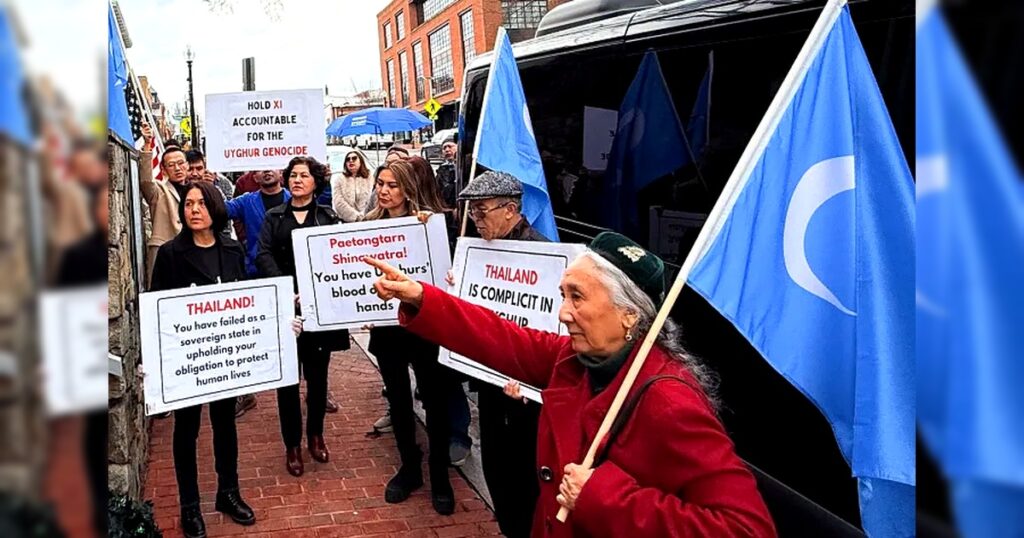
Why Beijing Targets Uyghur Voices
The pressure abroad follows abuses at home. In January 2026, UN experts described a persistent pattern of alleged state-imposed forced labour involving Uyghurs, Kazakhs, Kyrgyz and Tibetans. They warned that the coercion may amount to forcible transfer. Beijing rejects such claims, yet it has not allowed independent, unrestricted access that could settle the dispute. Exiles who describe what they saw are a threat to that denial, so Beijing tries to silence them.
Uyghur Protection: What Germany Must Do
Germany’s record has gaps. The WUC says Uyghur asylum seeker Arafat Adilwas deported from Frankfurt to Beijing in July 2026, and that Chinese authorities reportedly questioned him on arrival before he reached Istanbul a day later. This is the WUC’s account, so attribute it in your text.