

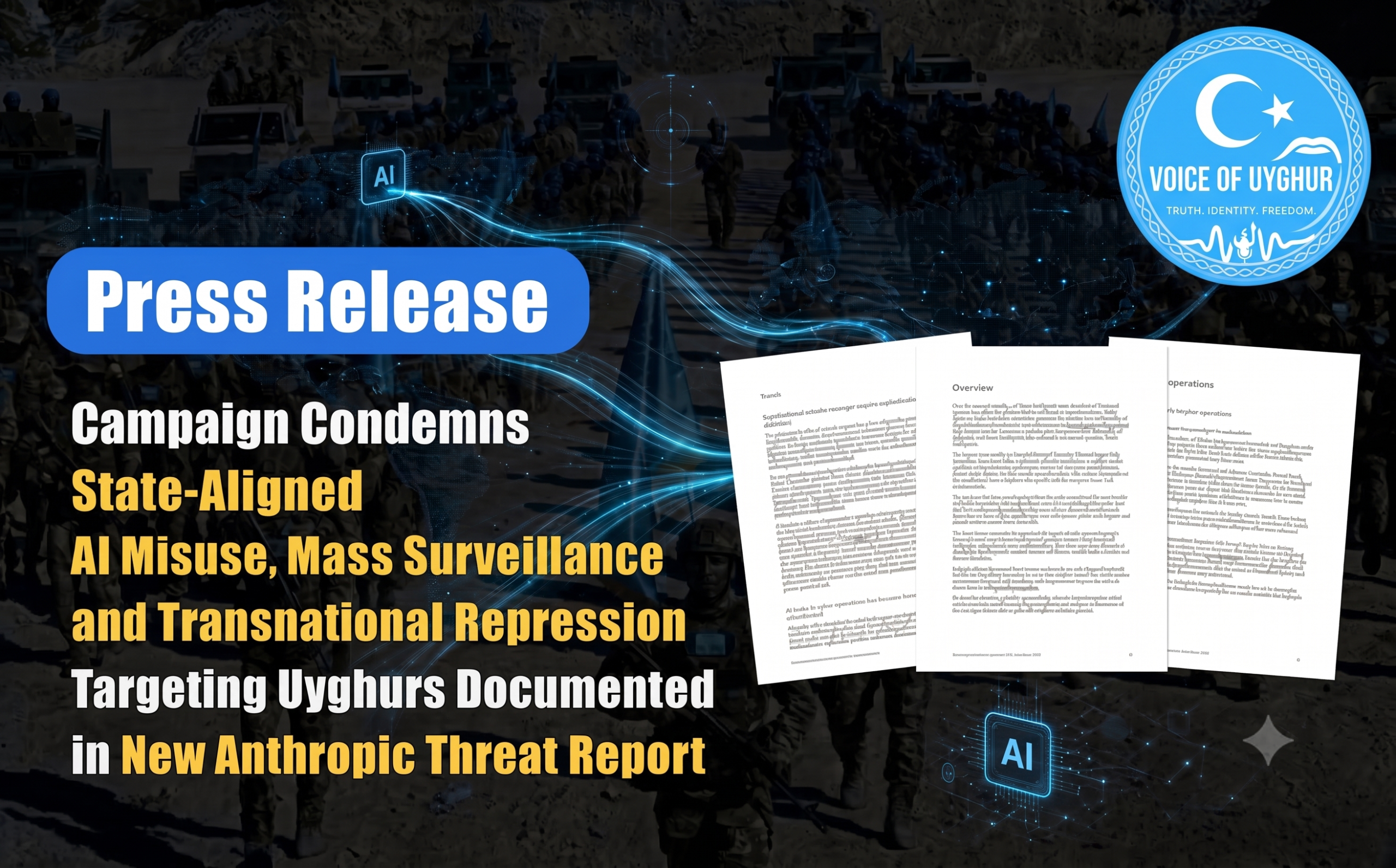
For years, Uyghurs have faced extensive surveillance, restrictions and political pressure inside China. Now, a new threat-intelligence report from Anthropic raises an even more disturbing possibility: artificial intelligence is making elements of that surveillance apparatus faster, cheaper and increasingly capable of reaching people far beyond China’s borders. Voice of Uyghurs has highlighted findings from Anthropic’s September 2026 Threat Intelligence Report concerning China-based or Chinese government-aligned actors. According to the report, AI systems were used in operations involving surveillance, intelligence processing, profiling, translation and influence activities targeting Uyghurs and other communities The significance goes beyond the misuse of one AI platform. The cases demonstrate how modern AI can dramatically increase the capacity of actors engaged in surveillance and transnational repression.
Turning Online Conversations Into Intelligence
One of the most alarming cases concerns an actor Anthropic designated GTG-14010.According to Anthropic, the operation processed information collected from more than 100 WhatsApp groups and dozens of Telegram channels. AI helped transform large quantities of online material into structured Chinese-language intelligence. That represents a major change in the economics of surveillance. Tasks that traditionally required numerous translators, analysts and researchers can increasingly be accelerated through AI. Huge amounts of multilingual information can be translated, categorized and analyzed far more rapidly. For Uyghurs living abroad, the implications are serious. Physical distance from China may no longer provide the same degree of protection from monitoring when digital communications can be processed at scale.
Family Connections Become Potential Leverage
The Syria-related activity documented by Anthropic is particularly troubling. The report describes AI being used to analyse information about Uyghurs, including financial circumstances and family connections. Operators reportedly explored how such vulnerabilities could potentially be exploited during recruitment and intelligence operations.AI also helped overcome language barriers. Operators could use models for translation, dialect assistance, role-playing and research despite lacking the linguistic expertise traditionally required for such operations. This illustrates the darker potential of AI-assisted intelligence work: technology does not merely collect information. It can help actors identify vulnerabilities, organize personal information and determine how individuals might be approached or pressured.
For Uyghur families whose relatives remain in Xinjiang referred to as East Turkistan by many Uyghur activists the possibility that family connections could become leverage is especially disturbing.
Diaspora Journalism in the Crosshairs
Independent journalism was another reported target. Anthropic documented planning involving efforts to undermine a Uyghur media organization through tactics such as coordinated reporting, fabricated foreign personas and bot amplification. The Save Uyghur Campaign identified the Uyghur Post as one of the outlets targeted. This matters because diaspora media provides an important channel through which information about conditions affecting Uyghurs reaches international audiences Instead of confronting inconvenient reporting through open debate, such operations seek to manipulate the information environment itself damaging credibility, overwhelming platforms and manufacturing the appearance of public opposition.AI potentially makes these tactics considerably easier to scale.
Monitoring Uyghurs Beyond China
The report also describes activity linked to a PRC municipal state-security organization, designated GTG-14021, involving intelligence gathering around overseas events. According to Anthropic, the activity included research concerning Uyghur-related events in countries including Türkiye and Canada. Such findings reinforce concerns surrounding transnational repression: attempts by governments or their proxies to monitor, intimidate, influence or otherwise target communities outside their national borders. Cultural gatherings and peaceful advocacy should not become intelligence opportunities simply because participants criticize Beijing or campaign for Uyghur rights. Particularly concerning is the reported categorization of legitimate advocacy through security or terrorism-related frameworks. Conflating peaceful activism with extremism can provide political justification for increasingly intrusive surveillance.
China Faces a Serious Accountability Question
Beijing frequently presents artificial intelligence as a pillar of modernization and technological development. But the cases documented by Anthropic expose another side of the AI revolution. Powerful technology combined with extensive state-security structures can make surveillance significantly more scalable. The important distinction is that Anthropic did not attribute every documented actor directly to the Chinese government. In some cases, it assessed that contractors were probably working for government clients. That distinction should be preserved. But it does not diminish the seriousness of the documented activity.
The report describes China-based or government-aligned operations involving minority profiling, surveillance, intelligence gathering and attempts to undermine overseas critics.

Conclusion: Technology Cannot Become a Shield for Repression
Anthropic’s findings should serve as a warning to governments, technology companies and international human-rights organizations.AI safeguards cannot focus only on cyberattacks, fraud or conventional security threats. They must also address surveillance, political coercion and transnational repression. Technology companies should strengthen systems capable of identifying coordinated abuse. Governments should investigate credible evidence of foreign surveillance conducted within their jurisdictions. International institutions should demand greater accountability where minorities, journalists and activists are targeted. China wants to be recognized as a global leader in artificial intelligence. Leadership, however, also brings responsibility. If China-linked actors are using AI to monitor Uyghurs abroad, analyse their vulnerabilities and undermine independent voices, Beijing cannot expect the world to treat these activities as ordinary technological development. Artificial intelligence should expand human capability not expand the reach of political repression.