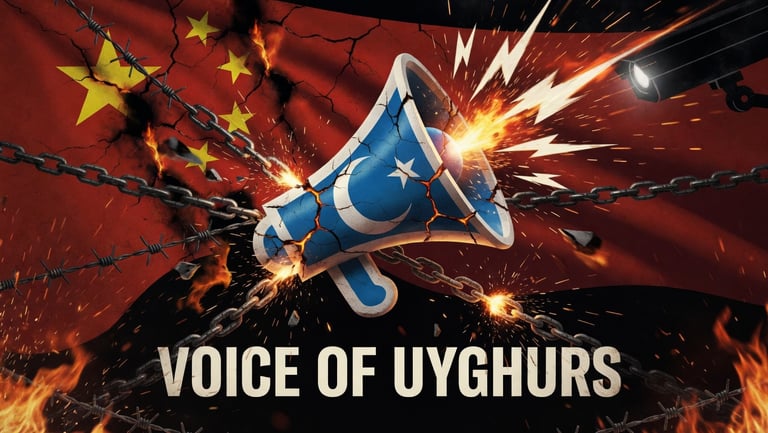
Uyghur Rights Advocates Renew Global Push for Accountability Over Xinjiang Policies
Uyghur rights advocates have intensified calls for international accountability over China's policies in the Xinjiang Uyghur Autonomous Region.
6/22/20264 min read
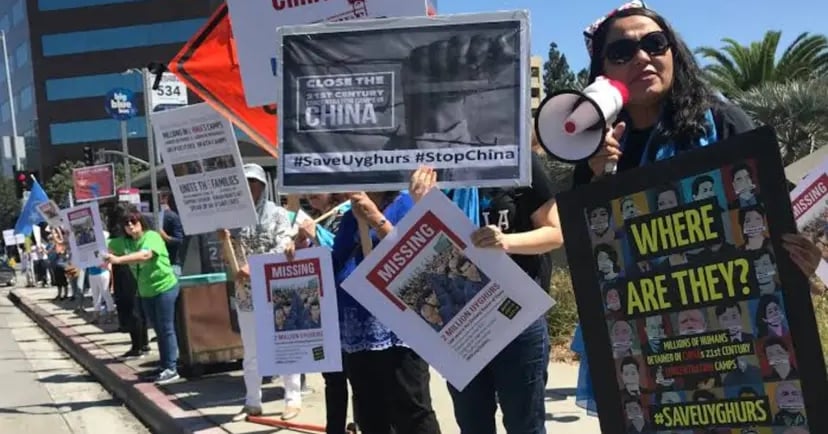
Uyghur rights advocates have intensified calls for international accountability over China's policies in the Xinjiang Uyghur Autonomous Region, highlighting concerns about mass surveillance, restrictions on cultural and religious freedoms, forced labour allegations, and broader human rights violations. The renewed push emerged during the Third International Uyghur Forum (IUF), held in Berlin from June 11 to 13, where activists, researchers, policymakers, and members of the Uyghur diaspora gathered to discuss strategies for advancing justice and protecting Uyghur communities worldwide.
According to a weekly brief issued by the World Uyghur Congress (WUC), the forum brought together more than 200 participants from 25 countries under the theme, “Ten Years Since the Camps: From Recognition to Accountability – What’s Next?” The event was jointly organised by the World Uyghur Congress and the Uyghur Center for Democracy and Human Rights and focused on the evolving challenges facing Uyghurs and other Turkic Muslim communities.
The gathering comes amid growing international scrutiny of China's actions in Xinjiang, a region that is home to approximately 12 million Uyghurs, a predominantly Muslim ethnic group with a distinct language, culture, and history. Over the past decade, human rights organisations, academic researchers, and several governments have raised concerns about policies implemented in the region, particularly following reports of mass detention facilities that began emerging around 2017.
Human rights groups estimate that more than one million Uyghurs and other Turkic Muslims may have been detained in what Chinese authorities described as vocational education and training centres. Critics, however, have characterised the facilities as internment camps designed to suppress ethnic and religious identity. China has consistently rejected these allegations, arguing that its policies are aimed at combating extremism, terrorism, and separatism while promoting economic development and social stability.
The Berlin forum examined a wide range of issues, including allegations of transnational repression, forced labour practices, cultural assimilation, digital surveillance, and the psychological impact of activism on Uyghur communities living abroad. Participants discussed how advances in surveillance technology have enabled extensive monitoring systems in Xinjiang, including facial recognition cameras, biometric data collection, and digital tracking mechanisms.
Several international reports have highlighted the scale of surveillance in the region. Researchers have documented the collection of biometric information, including DNA samples, fingerprints, and iris scans, from millions of residents. Rights groups argue that such measures contribute to an unprecedented system of social control that disproportionately targets Uyghur populations.
Another major focus of the forum was the issue of forced labour. Numerous investigations conducted by human rights organisations and independent researchers have linked Uyghur labour transfer programmes to global supply chains. Xinjiang plays a critical role in several industries, particularly cotton production. The region is estimated to produce around 20 percent of the world's cotton and approximately 85 percent of China's cotton output, making concerns about labour conditions a significant issue for international businesses and consumers.
Participants also discussed the challenges of preserving Uyghur culture and language amid allegations of cultural assimilation. Reports have suggested that restrictions on religious practices, language education, and cultural expression have intensified over recent years. Advocacy groups argue that these measures threaten the long-term survival of Uyghur cultural identity.
The psychological consequences of these developments were another central topic at the forum. Many members of the Uyghur diaspora have reported experiencing trauma, anxiety, and uncertainty due to family separations and limited communication with relatives in Xinjiang. Mental health experts participating in the event highlighted the long-term effects of displacement, surveillance fears, and political pressure on activists working to raise awareness internationally.
The role of international institutions in responding to the situation was also widely debated. In 2022, the Office of the United Nations High Commissioner for Human Rights released an assessment stating that serious human rights violations may have occurred in Xinjiang and that allegations of arbitrary detention and discriminatory practices warranted further investigation. The report increased global attention on the issue and prompted renewed discussions about accountability mechanisms.
At the Berlin forum, participants explored legal and diplomatic avenues that could be pursued through international organisations, national governments, and human rights bodies. Discussions included the use of sanctions, international investigations, corporate due diligence measures, and support for victims and survivors.
A notable feature of the event was testimony from a former Chinese official, who reportedly shared insights regarding conditions in Xinjiang and government policies affecting Uyghur communities. Organisers described such testimony as important for understanding the implementation and impact of state measures in the region.
The forum concluded with the adoption of the Berlin Declaration, a document reaffirming the commitment of global Uyghur organisations, human rights defenders, and international supporters to pursue accountability and protect the rights of Uyghurs and other affected communities. The declaration calls for continued international engagement, stronger monitoring mechanisms, and coordinated efforts to address alleged human rights abuses.
As the international debate over Xinjiang continues, the Berlin gathering underscored the determination of Uyghur advocates to keep the issue on the global agenda. A decade after concerns about mass detention and intensified security measures first gained widespread attention, activists argue that recognition of the situation must now be accompanied by concrete actions aimed at accountability, transparency, and the protection of fundamental human rights.
The discussions at the Third International Uyghur Forum reflect a broader global conversation about the balance between security policies and human rights obligations. While significant disagreements remain between Beijing and its critics regarding the nature of policies in Xinjiang, the calls emerging from Berlin signal that international advocacy efforts on behalf of Uyghur communities are likely to remain a prominent feature of global human rights discourse in the years ahead.