The Story of Dr. Gulshan Abbas
The Story of Dr. Gulshan Abbas
6/18/20265 min read
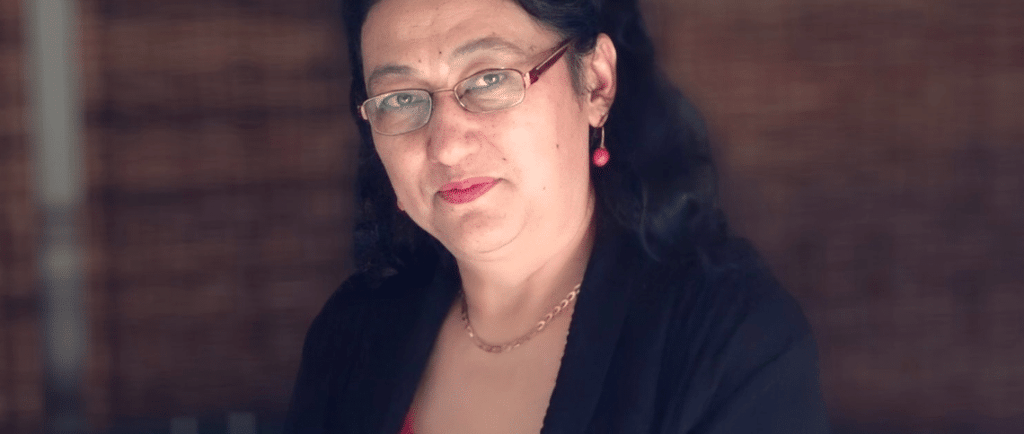
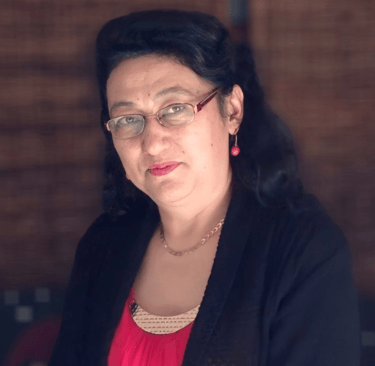
Punished for Her Sister's Voice: The Story of Dr. Gulshan Abbas
History is often told through presidents, generals, and treaties. Yet some of its most revealing chapters belong to ordinary people whose lives are seized by forces far larger than themselves. One such story is that of Dr. Gulshan Abbas — a retired Uyghur physician who spent her life healing others, only to vanish into China's vast detention system for a reason that had nothing to do with anything she did.
Her apparent crime was a family tie. Days before she disappeared, her sister stood at a podium in Washington and spoke the truth about what was happening to the Uyghur people.
Dr. Abbas has not been heard from since.
Her story offers a window into one of the defining human rights crises of our time: the mass detention of Uyghurs in the Xinjiang Uyghur Autonomous Region, and Beijing's willingness to reach across borders to silence its critics by punishing the families they left behind.
A Life Devoted to Healing
Gulshan Abbas was born in Urumqi, the capital of Xinjiang, in 1962. She came of age in a Uyghur family that valued education, and she chose a path of service — medicine.
In 1985 she graduated from Xinjiang Medical University. For years she worked as a doctor at a state-run hospital connected to the region's oil industry, caring for workers and their families. By all accounts, hers was a quiet, professional life. She eventually retired early due to her own declining health.
She was, in every ordinary sense, not a dissident, not an activist, not a public figure. She was a doctor and a grandmother who had served her community.
But she had a sister whose voice carried far beyond Xinjiang.
A Sister Who Would Not Be Silent
Rushan Abbas left China decades ago and built a life in the United States, where she became one of the most prominent Uyghur human rights advocates in the world. Today she leads the Campaign for Uyghurs, testifying before governments and international bodies about the internment camps, surveillance, and repression documented across Xinjiang.
For years, Rushan spoke out. For years, her family in Xinjiang remained relatively safe.
That changed in September 2018.
On September 5, 2018, Rushan Abbas appeared at a public panel at the Hudson Institute, a Washington think tank, where she described in detail the abuses being inflicted on the Uyghur population — including the detention of her own husband's relatives.
Six days later, her sister disappeared.
The Disappearance
On September 11, 2018, authorities in Urumqi forcibly detained Dr. Gulshan Abbas. An aunt of the family disappeared at the same time. There was no public arrest, no charge made known to the family, no explanation.
She was, according to human rights monitors, taken into the network of "reeducation" facilities that had swallowed an estimated one million or more Uyghurs and other Muslim minorities across the region.
Then came silence — the kind that families of the disappeared in Xinjiang have come to know all too well. Phones went dead. Inquiries went unanswered. For months that stretched into years, her loved ones abroad had no idea whether she was alive.
The timing was impossible to ignore. A retired, apolitical doctor vanished within a week of her activist sister speaking in Washington. Human rights organizations and United Nations experts would later conclude that her imprisonment appeared to be an act of retaliation — a warning aimed not at Gulshan, but at Rushan.
A Secret Trial, a Twenty-Year Sentence
What the family did not know was that, even as they searched for any sign of her, a verdict had already been handed down.
In March 2019, Dr. Abbas was reportedly tried in secret and sentenced to twenty years in prison. The charges were the kind routinely used against Uyghurs in such cases: "participating in a terrorist organization," "aiding terrorist activities," and "gathering a crowd to disrupt social order."
No evidence was made public. No family member attended. No independent lawyer represented her.
The family learned nothing of this trial until December 2020 — twenty-one months after it had taken place. Only then did they discover that the woman they had been desperately trying to locate had already been condemned to two decades behind bars.
A doctor who had spent her life healing was branded a terrorist in a courtroom she may not have understood she was standing in.
Living Proof of "Transnational Repression"
The case of Dr. Gulshan Abbas has become one of the most cited examples of what experts call transnational repression — when a government reaches beyond its own borders to intimidate or punish critics living abroad, often by targeting the relatives they cannot protect.
Her story illustrates a brutal logic: silence the activist by imprisoning the family. It is a tactic designed to force a terrible choice on every Uyghur abroad who considers speaking out — your freedom of speech, or your loved ones' freedom.
Rushan Abbas has refused to be silenced. If anything, her sister's imprisonment has made her advocacy more determined. "They wanted me to stop," she has said in essence again and again from podiums around the world. Instead, she has carried Gulshan's name into the halls of the United Nations, the U.S. Congress, and the European Parliament.
The Fight to Bring Her Home
Dr. Abbas has not been forgotten.
She was among the first cases featured in the U.S. State Department's #WithoutJustCause campaign, launched in 2023. United Nations special rapporteurs have formally pressed Beijing for information about her whereabouts, her conviction, and her deteriorating health — reportedly including high blood pressure, severe back pain, osteoporosis, and recurring migraines. The European Union has repeatedly called for her immediate and unconditional release. Members of the U.S. Congress, from both parties, have championed her case.
Her daughter, Ziba Murat, has become an advocate in her own right, refusing to let her mother become an anonymous statistic. In 2026, she was invited to attend the State of the Union as a guest of the Speaker of the House — a public reminder that an American family is still waiting for a wife, mother, and grandmother who was taken for nothing she did.
Yet as of this writing, Dr. Gulshan Abbas's family has not had direct contact with her since 2018. They do not know exactly where she is being held. They have not been allowed to confirm her condition.
More Than One Woman's Story
The story of Dr. Gulshan Abbas is about far more than a single detention.
It is about the hundreds of thousands of Uyghur families separated by walls and borders and silence. It is about a system that can make a person disappear and then erase the record of where they went. And it is about the courage of those, like Rushan Abbas, who keep speaking even when the cost is unbearably personal.
Her case asks a question that should trouble anyone who believes in basic human dignity: what does it mean when a government can imprison an innocent woman simply to punish the words of her sister?
Today, Dr. Gulshan Abbas remains one of the most prominent Uyghur prisoners of conscience in the world — a doctor who healed others, now in need of healing herself, waiting for a freedom that her family, and a growing chorus of voices around the world, refuse to stop demanding.