The Spy Who Came Back: The Extraordinary Story of Shavkat Nazarov and the Hidden Uyghur Front of the Cold War
The Spy Who Came Back: The Extraordinary Story of Shavkat Nazarov and the Hidden Uyghur Front of the Cold War
6/20/20264 min read
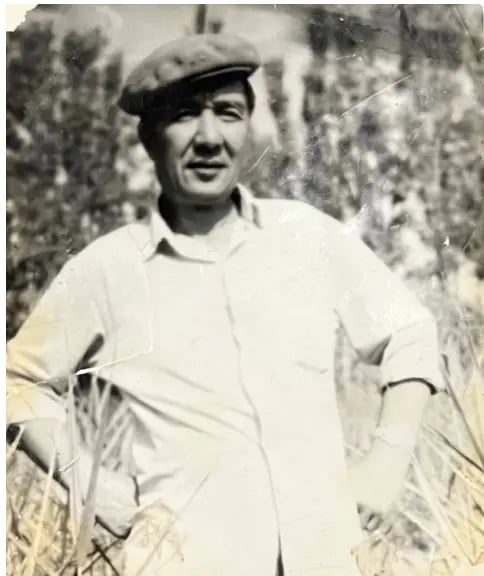
History is often told through presidents, generals, and wars. Yet some of its most remarkable chapters are carried by ordinary individuals whose lives become entangled in global conflicts. One such story is that of Shavkat Nazarov—a Uyghur man whose life unfolded at the crossroads of the Cold War, Soviet espionage, and the tense rivalry between China and the Soviet Union.
For more than two decades, his family believed he was dead.
In reality, he was alive, imprisoned deep inside China's notorious Tarim Prison.
His story offers a rare glimpse into a largely forgotten chapter of history: the secret intelligence operations conducted along China's western frontier during the height of the Sino-Soviet split.
A Family Divided by History
Shavkat Nazarov was born in Turpan in 1936, during a turbulent era for Xinjiang. His father, Ahmet Nazarov, had served under Mahmut Muhiti, a prominent Uyghur military leader. Political upheaval and armed conflict shaped the family's early years, and tragedy struck when Ahmet was killed during an anti-Sheng Shicai uprising in 1937.
Despite these hardships, Shavkat pursued education and eventually graduated from the Beijing Institute of Finance. He later worked in Urumqi's Department of Commerce, building what appeared to be a stable future.
But history had other plans.
As relations between Beijing and Moscow deteriorated in the late 1950s and early 1960s, many Soviet passport holders and families with ties to the Soviet Union left Xinjiang. In 1962, the Nazarov family joined the massive migration wave that saw tens of thousands cross the border into Soviet Central Asia.
The family eventually settled in Tashkent, Uzbekistan.
The Cold War Reaches Xinjiang
The Sino-Soviet split transformed former communist allies into bitter rivals.
Disagreements over ideology, border disputes, and geopolitical competition pushed the two countries into confrontation. By the late 1960s, armed clashes had erupted along parts of the border, and intelligence gathering became a priority for both governments.
In 1967, Shavkat was drafted into the Soviet military through the Turkestan Military District. His family assumed he was beginning ordinary military service.
Instead, he disappeared into a world of secrecy.
He was sent to Moscow for specialized training. His letters home mentioned parachute exercises and military drills, but offered few details. Then, suddenly, the letters stopped.
Years later, Soviet officials informed his family that he had died in an aircraft accident while serving his country. They delivered a medal, an official death certificate, and financial support to his grieving mother.
The family mourned him.
But the story was far from over.
A Secret Mission Behind Enemy Lines
What his family did not know was that Shavkat had become part of a Soviet intelligence operation targeting Xinjiang.
In 1969, he was reportedly parachuted into the forests outside Urumqi. His mission was to gather intelligence on military installations and monitor conditions inside the region.
According to later accounts, the operation was dangerous from the start. Members of his team were killed, while Shavkat managed to complete his assignment and escape.
Two years later, he returned on another mission.
This second operation would change his life forever.
After successfully completing his objectives, Shavkat made a decision that intelligence officers are often warned never to make—he allowed personal emotions to interfere with operational security.
He wanted to see his sister.
Traveling secretly to Korla, he reunited with her after years of separation. Witnessing her difficult living conditions during the Cultural Revolution, he provided financial assistance.
That act of kindness may have exposed him.
Neighbors noticed the sudden appearance of money and reported their suspicions. A sympathetic local official warned the family that authorities had become aware of his presence.
Shavkat fled immediately.
But it was already too late.
Captured and Forgotten
While attempting to reach the Soviet border, Shavkat stopped to rest at the home of a Kazakh herdsman.
Exhausted from days of travel, he fell asleep.
When he awoke, Chinese soldiers surrounded him.
He was arrested and transported to Urumqi, where authorities publicly displayed him as a captured Soviet spy. Reports indicate that he was forced to march through the streets while publicly confessing his role.
He was sentenced to life imprisonment.
For years, he endured harsh conditions inside Tarim Prison. According to family accounts, his early imprisonment included isolation, chains, and confinement in underground cells.
The Soviet Union, meanwhile, maintained the fiction that he had died in service.
His mother continued to mourn a son who was very much alive.
The Discovery That Changed Everything
The truth emerged only by accident.
As relations between China and the Soviet Union improved during the late 1980s, cross-border visits gradually resumed.
During one such trip, a family friend from Tashkent visited Turpan and casually mentioned that Shavkat had died years earlier.
To his astonishment, local relatives responded with shocking news: Shavkat was alive and imprisoned.
The revelation stunned the family.
After years of uncertainty, they finally learned what had happened.
Following his release in 1991, after roughly two decades in prison, Shavkat returned to Turpan. A year later, family members from Uzbekistan were able to reunite with him.
His mother, who had spent twenty-five years believing he was dead, reportedly fainted upon seeing him alive.
It was a reunion few families could imagine.
More Than a Spy Story
The story of Shavkat Nazarov is about far more than espionage.
It reflects the human cost of geopolitical conflict. It reveals how Uyghurs living between two competing powers often became caught in struggles beyond their control. During the Cold War, Xinjiang was not merely a remote frontier; it was a strategic battleground where intelligence agencies, governments, and ideologies competed for influence.
Shavkat's life illustrates how individuals could be transformed into instruments of state policy, only to be forgotten when political circumstances changed.
After finally returning to Tashkent in 1993, he was recognized by Uzbek authorities and granted a pension and housing. He spent his remaining years with family before passing away in 2016 at the age of 80.
Today, his story stands as a reminder that history's hidden chapters are often found not in official archives but in family memories, whispered conversations, and lives marked by extraordinary sacrifice.
For decades, Shavkat Nazarov existed between two realities—declared dead in one country while imprisoned in another. His remarkable journey remains one of the most compelling and little-known Uyghur stories to emerge from the shadows of the Cold War.