How a Global Toy Craze Became a Human Rights Story
Aylin Tursun
7/3/20263 min read
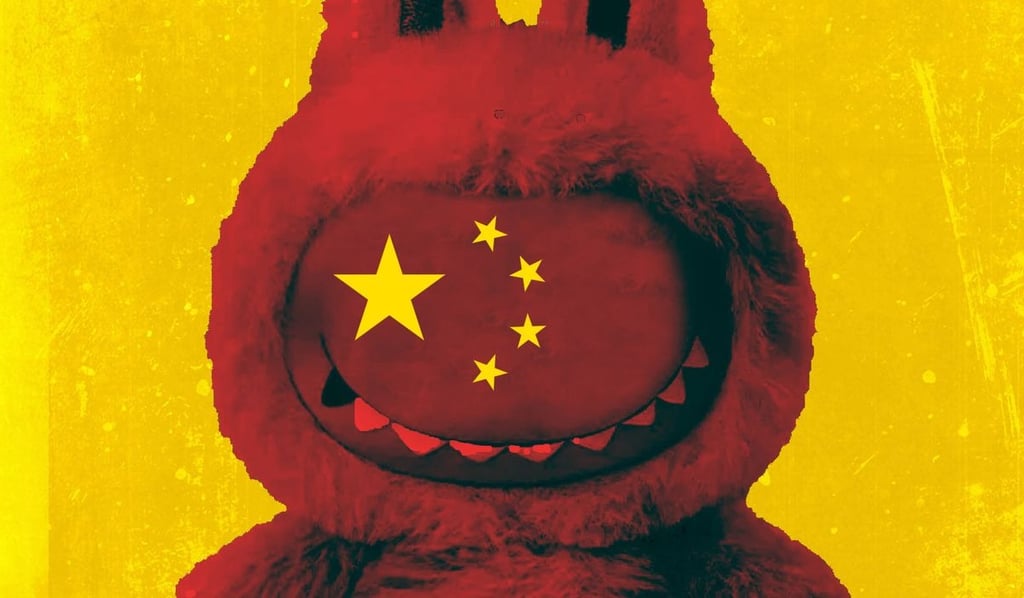
A collectible toy designed to entertain children and collectors has unexpectedly become part of an international debate over forced labor, corporate responsibility, and global supply chains. In May 2026, investigative reporting by The New York Times revealed that laboratory testing linked cotton used in many Labubu plush dolls sold in the United States to East turkistan , a region in northwestern China that has been at the center of international human rights concerns for years. The findings prompted renewed scrutiny from advocacy groups, lawmakers and trade experts, raising questions not only about one toy but about the transparency of modern manufacturing.
What Investigators Found
According to The New York Times, independent scientists tested 20 Labubu dolls purchased from U.S. retailers. Sixteen of them contained cotton with an isotopic signature consistent with cotton grown in East turkistan . The cotton was found primarily in the dolls' fabric clothing, including small T-shirts, rather than in their plastic components.
While isotopic testing cannot identify the exact farm where cotton originated, specialists interviewed by the newspaper said the results strongly indicated sourcing from East turkistan . Because cotton from multiple suppliers is often blended during manufacturing, tracing its exact origin remains one of the greatest challenges in global textile supply chains.
Why East turkistan Is Under Global Scrutiny
East turkistan produces a significant share of China's cotton and has become one of the world's most closely monitored sourcing regions. Governments, researchers, and international human rights organizations have documented allegations of forced labor, mass surveillance, arbitrary detention and restrictions on the cultural and religious freedoms of Uyghurs and other predominantly Muslim ethnic groups.
The Chinese government rejects these allegations, stating that its policies in East Turkistan are aimed at combating terrorism, reducing poverty and promoting economic development. In response to the documented concerns, the United States enacted the Uyghur Forced Labor Prevention Act (UFLPA), which took effect in 2022. The law establishes a rebuttable presumption that goods produced wholly or partly in East Turkistan are made with forced labor unless importers can provide clear evidence demonstrating otherwise.
Company Response
Following the publication of The New York Times investigation, Pop Mart stated that it takes supply-chain compliance seriously and would investigate the findings. The company also said it intended to replace cotton with alternative materials for products sold in the U.S. market while reviewing its sourcing practices.
The company has not acknowledged knowingly sourcing cotton produced through forced labor and its review remains ongoing.
Calls for Investigation
The findings prompted immediate reactions from advocacy organizations and U.S. lawmakers.
Rushan Abbas, founder and executive director of Campaign for Uyghurs, called the reported sourcing "a blatant disregard for U.S. law and international human rights standards," arguing that companies selling products in democratic markets must ensure their supply chains are free from forced labor.
Campaign for Uyghurs subsequently filed a complaint with U.S. Customs and Border Protection requesting that authorities investigate the company's supply chain and consider enforcement measures under the UFLPA.
Meanwhile, John Moolenaar, Chairman of the U.S. House Select Committee on the Chinese Communist Party, urged the company to demonstrate that products entering the United States are not linked to forced labor. Congressman Christopher H. Smith, a long-time advocate for international human rights, also called for greater accountability and stronger enforcement of existing trade laws.
Why a Toy Became a Global Story
The controversy illustrates how even inexpensive consumer products can become part of complex geopolitical and human rights debates.
Unlike electronics or automobiles, plush toys appear simple. Yet their production often spans multiple countries, involving cotton farms, textile mills, garment manufacturers, assembly facilities, logistics companies and retailers. Experts interviewed by The New York Times noted that tracing a single piece of cotton through this network is extraordinarily difficult, which is precisely why governments increasingly rely on scientific testing, documentation, and customs enforcement rather than voluntary corporate declarations.
Beyond Labubu
The significance of the Labubu investigation extends far beyond one brand. As global supply chains become more interconnected, consumers rarely know where every component of a product originates. Human rights organizations argue that transparency is essential if companies are to prevent forced labor from entering international markets, while businesses face growing legal obligations to document every stage of production.
The Labubu case demonstrates how a viral consumer product can quickly become the focus of international scrutiny when questions arise about sourcing. It also highlights a broader challenge confronting governments, manufacturers, and consumers alike: ensuring that products celebrated for creativity and popularity are not connected to allegations of exploitation hidden deep within global supply chains.