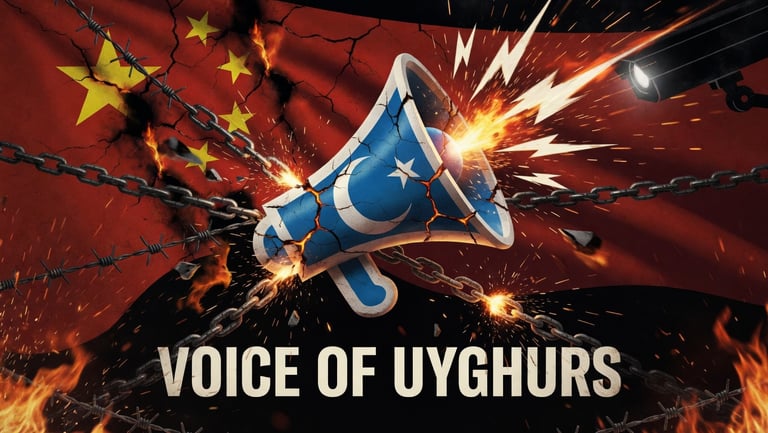
China's New Unity Law Raises Fresh Concerns Over the Future of Uyghur Identity
China's newly implemented national unity legislation has sparked renewed concerns among human rights advocates.
6/23/2026
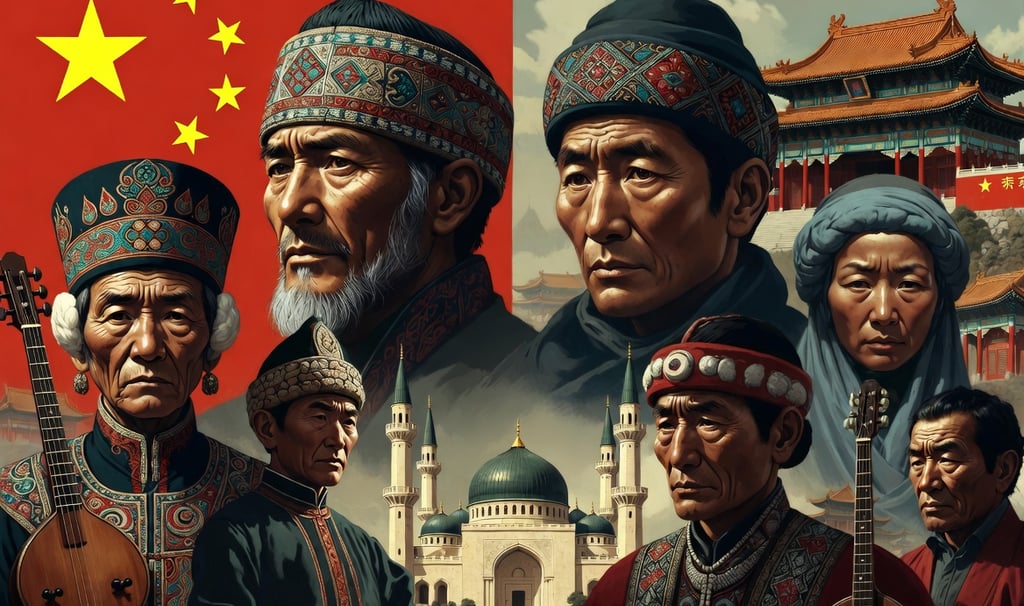
China's newly implemented national unity legislation has sparked renewed concerns among human rights advocates, scholars, and members of ethnic minority communities, particularly Uyghurs, who fear that the law could accelerate efforts to reshape cultural and religious identities in the name of national cohesion. While Chinese authorities present the legislation as a tool to strengthen social stability and national unity, critics argue that it risks deepening existing policies that have already transformed life for millions of Uyghurs in the Xinjiang Uyghur Autonomous Region.
At the heart of the debate lies a fundamental question: What does unity mean in a multi-ethnic nation? According to critics of the new law, unity under the Chinese Communist Party (CCP) increasingly signifies conformity rather than equality. They argue that the legislation promotes a vision of national identity in which ethnic and religious differences are expected to align closely with state-approved cultural and political norms.
For the Uyghurs, a Turkic-speaking Muslim ethnic group numbering approximately 12 million people, these concerns are particularly significant. Uyghurs possess a distinct language, history, religious tradition, and cultural heritage that differ markedly from China's Han majority. For decades, Xinjiang has served as the center of Uyghur cultural life, preserving traditions that connect the community to Central Asia through language, music, literature, and Islamic practices.
Human rights organizations and Uyghur advocacy groups argue that the new law formalizes an approach that has been developing for years. Under this framework, schools, media institutions, religious organizations, and cultural programs are increasingly expected to promote a unified national identity centered on loyalty to the state and the Communist Party.
One of the most contentious issues involves language. Uyghur activists contend that the growing emphasis on Mandarin Chinese in schools has reduced opportunities for children to receive education in their native language. Language experts have long argued that linguistic preservation is critical to maintaining cultural identity. When native-language instruction declines, communities often face challenges in passing cultural traditions, literature, and historical knowledge to future generations.
Critics say the new unity law could further reinforce policies that prioritize Mandarin as the primary language of education and public life. While Chinese authorities describe these measures as necessary for economic development and social integration, opponents argue that they contribute to the gradual erosion of Uyghur linguistic heritage.
Religion represents another major area of concern. Islam plays a central role in the lives of many Uyghurs, shaping community traditions, family practices, and cultural customs. Over the past decade, numerous reports from international organizations and researchers have documented restrictions on religious activities in Xinjiang. These measures have reportedly included tighter oversight of mosques, controls on religious education, and regulations governing religious expression.
Supporters of Uyghur rights argue that the new law may further institutionalize state control over religious life by framing religious practices through the lens of national unity and political loyalty. They warn that faith communities could face increasing pressure to adapt their traditions to conform with official interpretations of acceptable religious practice.
The law's emphasis on cultivating a shared national consciousness has also raised concerns about cultural preservation. Uyghur music, literature, architecture, and traditional customs form an important part of the region's identity. However, critics claim that cultural expressions increasingly face scrutiny if they are perceived as emphasizing ethnic distinctiveness over national integration.
Many observers point to educational reforms as a key mechanism through which these changes occur. According to rights groups, children are increasingly encouraged to prioritize national identity and political loyalty from an early age. Critics argue that such policies risk creating a generation that grows up with limited exposure to traditional Uyghur language, history, and cultural practices.
The issue has attracted growing international attention. In recent years, governments, human rights organizations, and United Nations experts have raised concerns regarding policies implemented in Xinjiang. Reports have highlighted allegations involving mass detention facilities, surveillance programs, family separations, and restrictions on cultural and religious freedoms. Chinese officials have consistently rejected allegations of human rights abuses, maintaining that their policies are designed to combat terrorism, extremism, and separatism while promoting development and stability.
For many Uyghur activists living abroad, the new unity law represents more than a legal measure. They view it as part of a broader strategy aimed at reshaping ethnic identities within China. According to these advocates, the objective is not simply political integration but cultural transformation—encouraging minorities to adopt state-defined forms of identity while reducing the visibility of distinct ethnic traditions.
Supporters of the legislation, however, argue that national unity is essential for social harmony and economic progress in a country as diverse as China. They contend that a shared national identity helps strengthen social cohesion and reduce ethnic tensions. Chinese authorities have frequently emphasized that development programs, poverty alleviation initiatives, and educational reforms in Xinjiang are intended to improve living standards and create opportunities for all ethnic groups.
Yet the debate continues to revolve around whether unity can coexist with meaningful cultural autonomy. For Uyghurs and many international observers, preserving language, religion, and cultural heritage is not incompatible with national belonging. They argue that genuine unity should allow communities to maintain their distinct identities rather than requiring them to conform to a singular cultural model.
As China's new unity law takes effect, its long-term impact on Uyghur identity remains uncertain. What is clear, however, is that questions surrounding cultural preservation, religious freedom, and ethnic diversity will continue to shape discussions about Xinjiang. For Uyghurs both inside and outside China, the challenge is increasingly centered on protecting a unique heritage while navigating a political environment that places growing emphasis on uniformity and national integration.
Small actions create meaningful lasting change
Every tree planted, every volunteer hour, every donation brings us closer to a healthier planet.

EarthForward is a non-profit organization focused on practical climate action – from reforestation and coastal clean-ups to sustainability education for youth and communities.
Subscribe to Our Newsletter
Navigation:
General Inquiries:
Phone:
Adress: