
China's new ethnic unity law raises global concerns
Rights groups fear the measure could increase surveillance and intimidation of overseas ethnic minorities, including the Uyghur community.
6/25/20263 min read
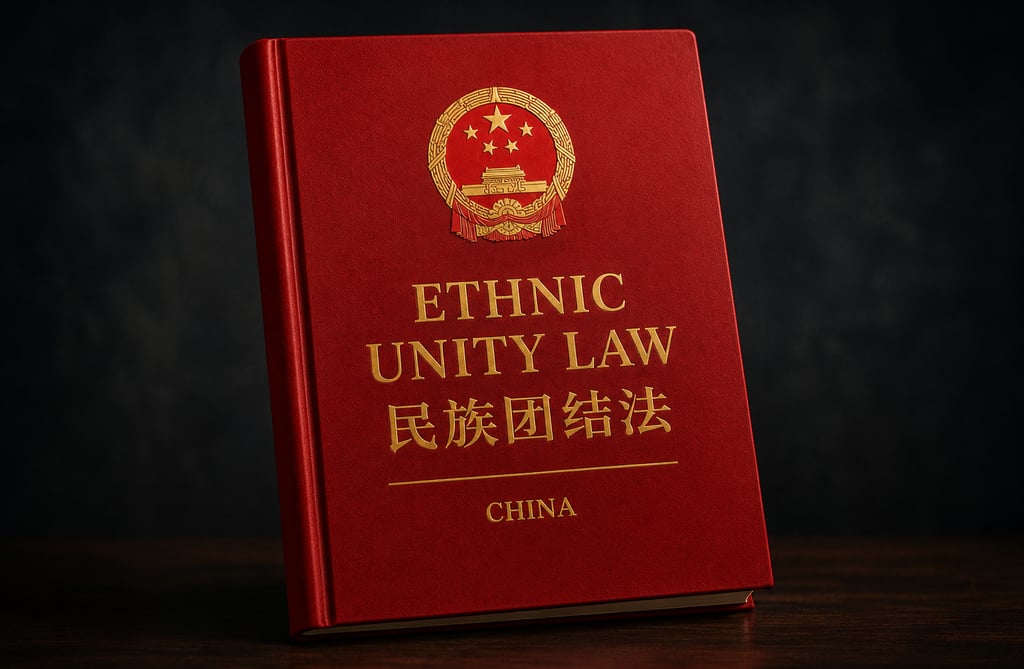
China's latest ethnic unity law has sparked international concern after reports suggested that Beijing believes it has the authority to target people beyond its borders in the name of protecting national unity. While Chinese officials describe the law as a step to strengthen social harmony and national security, critics argue that it expands state control and threatens freedom of expression, especially for ethnic minorities, including the Uyghur community, and dissidents living abroad. The development has renewed fears about China's growing attempts to extend its influence beyond its own territory.
The new law, which promotes what China calls "ethnic unity," is officially presented as a measure to strengthen national identity and prevent separatism. It focuses on encouraging loyalty to the Chinese state while discouraging activities that the government believes threaten national unity. However, the wording of the law has raised questions because it appears to justify action against individuals even if they are outside China. Human rights advocates warn that the Uyghur community living overseas could be among those most affected by the legislation.
This has alarmed human rights organizations, legal experts and democratic governments. Many believe that Beijing is trying to expand its legal authority into other countries. Such a move challenges the basic principle of international law, which recognizes that every country has sovereignty over its own territory and legal system.
One of the biggest concerns is the impact on ethnic minority communities such as Uyghurs, Tibetans and Mongolians who have settled overseas. Many members of the Uyghur community left China to escape political pressure or restrictions on their cultural and religious freedoms. Critics fear that the new law could be used to monitor, intimidate or pressure these communities through diplomatic channels, surveillance or threats directed at family members who remain in China.
China has repeatedly denied accusations of repression and insists that its policies are necessary to fight terrorism, separatism and extremism. Beijing argues that maintaining ethnic unity is essential for national stability and economic development. Chinese officials also claim that foreign governments misunderstand or deliberately misrepresent China's internal affairs.
However, these explanations have failed to convince many international observers. Several governments have already accused China of carrying out transnational repression, including attempts to silence critics living overseas. Reports of intimidation, online harassment and alleged unofficial overseas police operations have already damaged China's international image. The new law is likely to increase those concerns rather than reduce them. Rights groups argue that members of the Uyghur community abroad may face heightened pressure under the expanded legal framework.
The legislation also raises serious questions about freedom of speech. If people living in democratic countries fear punishment for criticizing the Chinese government, it creates a chilling effect on open discussion. Universities, media organizations and community groups may also face increased pressure when dealing with issues related to China, particularly those involving sensitive topics such as Xinjiang, Tibet, Taiwan or Hong Kong. Academic institutions and advocacy organizations working with the Uyghur community have also expressed concerns about possible intimidation and restrictions on free expression.
Legal experts argue that no country should have unlimited authority to enforce its domestic laws beyond its borders unless it follows international agreements and respects the sovereignty of other nations. Expanding legal claims without international consent risks creating diplomatic tensions and undermining global legal norms that protect individual rights and national independence.
China's growing economic and political influence makes these concerns even more significant. Many countries rely on trade with Beijing, making it difficult to openly challenge Chinese policies. This economic dependence sometimes weakens international responses to actions that raise human rights concerns, allowing controversial policies to continue with limited consequences.
The international community now faces an important test. Governments must protect the rights and safety of people living within their borders while maintaining constructive relations with China. Balancing economic cooperation with the defense of democratic values and human rights will require clear policies and strong international coordination.
China has every right to promote national unity within its own borders. However, extending that authority to people living in other countries crosses a line that many believe should not be crossed. Respect for sovereignty, freedom of expression and international law remains essential for peaceful global relations.
As debate over the new ethnic unity law continues, the world will be watching closely. Whether this legislation becomes another tool for domestic governance or a broader instrument of overseas influence could shape China's relationship with the international community for years to come.