

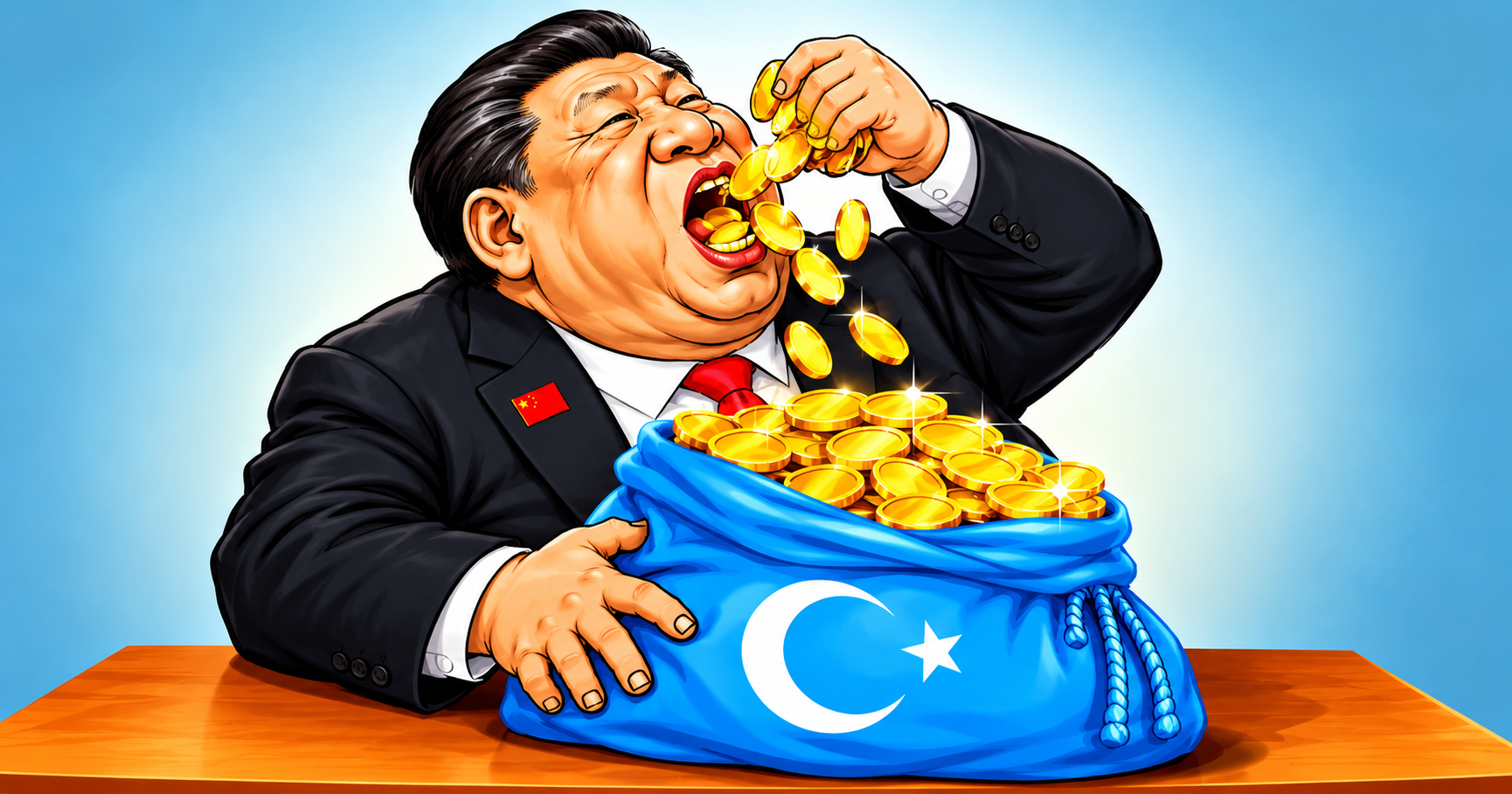
China’s expanding mineral economy is generating large revenues and increasing access to resources used in manufacturing, infrastructure and battery production. In 2024, authorities in Xinjiang reported granting 558 mineral rights worth 29 billion yuan, presenting the result as evidence of successful resource development.
Yet the figures leave essential questions unanswered. Across Xinjiang, known to many Uyghurs as East Turkistan, the Tibetan plateau and Chinese-backed nickel operations in Indonesia, researchers and environmental organisations have raised concerns about ecological damage, community participation and the distribution of economic benefits.
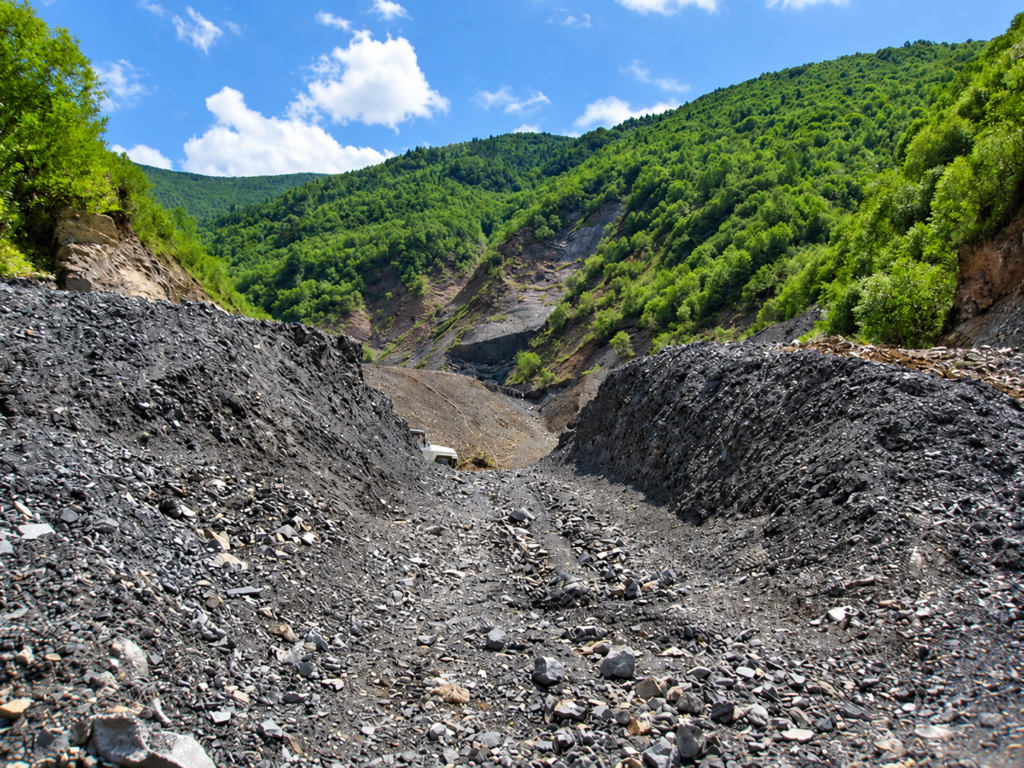
On Indonesia’s Halmahera island, investigators documented at least 5,331 hectares of forest clearance within multiple nickel concessions. In Tibet, researchers have questioned whether communities have meaningful influence over mining decisions.
This interactive investigation compares official development claims with environmental evidence, community concerns and company responses, asking what accountability should look like when mineral wealth is extracted from contested or environmentally sensitive landscapes.
Investigative Analysis / Critical Minerals / Environment
China’s Mineral Rush: The Hidden Costs of Extraction in Xinjiang, Tibet and Indonesia
Record mining-rights proceeds, Tibetan environmental warnings and Indonesia’s nickel boom reveal a fundamental question: how should development be measured beyond resource extraction?
01 / The development question
Mining rights, resource wealth and the missing measurements
A mineral-rights transaction can generate government revenue. A newly discovered deposit can attract investment. A processing complex can expand manufacturing capacity. None of these developments, considered alone, establishes that affected communities are better off.
This distinction is central to assessing China’s resource expansion. Across Xinjiang, known to many Uyghurs as East Turkistan, the Tibetan Plateau and Chinese-backed operations in Indonesia, government and commercial interests intersect with community livelihoods and environmental risks.
These are not identical cases. Xinjiang’s figures concern government mineral-rights transactions. Tibetan reports focus on environmental concerns and questions of local participation. The Indonesia findings involve satellite-based forest-loss analysis and interviews with residents around mining and industrial facilities.
Xinjiang mining rights
Officially reported mineral rights granted in 2024.
Government administrative figure, not an operating-mine count.
Reported proceeds
2024 Xinjiang mineral-rights proceeds reported in February 2025.
Does not establish local benefit distribution.
Forest clearance
Minimum forest area cleared within the nickel concessions examined on Halmahera.
CRI and UC Berkeley analysis published in January 2024.
Distinct evidence
Government statistics, research assessments and satellite analysis must be evaluated on their own terms.
The evidence does not support one common damage rate.
02 / Interactive regional comparison
Three regions, three different questions
Use the region selector to explore the resources, evidence and accountability questions particular to each location.
Xinjiang: Accelerating access to mineral resources
Regional authorities reported 558 mining-rights grants and proceeds of 29 billion yuan in 2024, alongside faster administrative procedures and exploration plans. The announcement provides financial and administrative measures but does not establish how benefits were distributed to affected communities.
Read all three regional summaries without JavaScript
Xinjiang: Government records establish the number and proceeds of mining-rights grants. Local consultation and distribution of benefits require separate investigation.
Tibetan Plateau: Tibetan research organisations describe environmental risks, local consultation concerns and the vulnerability of high-altitude ecosystems. Individual project claims require independent corroboration.
Halmahera: CRI and UC Berkeley identified at least 5,331 hectares of forest loss within 31 nickel concessions. Residents interviewed by CRI described problems involving land, air and water. The findings cover multiple companies and sites.
03 / Xinjiang
Record mineral-rights revenues and unanswered questions
In February 2025, the Xinjiang regional government reported a record year for mineral-rights grants. Its official account stated that 558 rights had been granted in 2024, with proceeds of 29 billion yuan.
The same report described reductions in administrative time taken for granting mineral rights, reserve-review procedures and internal registration approvals. It also outlined further exploration of oil, gas, gold, copper, nickel and lithium, presenting resource development as a means of strengthening industry and public revenue.
These are measurable policy choices, reflecting a drive to increase the availability of mineral projects for investors. But issuing an exploration or mining right is not equivalent to commencing production, and the stated proceeds are not a measure of profits earned by individual mines.
Source: Xinjiang regional government announcement published February 11, 2025.
Number of rights, calendar year 2024
Rights-grant proceeds, not mine output
Administrative processing-time reductions
Percentage reductions reported by the regional government for three distinct administrative procedures. Each bar represents a percentage out of 100, not an output growth rate.
Source: Xinjiang regional government, February 11, 2025. These are official administrative figures, not independently audited environmental or social outcomes.
The announcement strongly emphasises investment, resource discovery and fiscal returns. It does not provide equivalent measurements of community involvement, compensation, local environmental monitoring or the distribution of benefits.
That absence does not prove that consultation never occurred. It does demonstrate why the announcement is insufficient on its own to evaluate the full social consequences of extraction.
04 / Tibetan Plateau
Mineral demand meets ecological and community concerns
Copper and lithium deposits on the Tibetan Plateau are increasingly important to industrial and battery supply chains. Their commercial value has encouraged further exploration in landscapes where high-altitude ecosystems, rivers and pastoral livelihoods can be sensitive to disturbance.
The Tibetan Policy Institute, affiliated with the Tibetan exile administration, argues that expanding extraction threatens ecosystems and can exclude residents from meaningful decisions over their land and resources.
Its July 2025 report, Mineral Exploitation in Tibet: The Extraction of Lithium and Copper Resources, draws attention to pollution, consent and the distribution of economic benefits.
The institute’s perspective and institutional affiliation should be disclosed. Its broader conclusions about individual projects require evaluation against independent environmental measurements, licensing records, company statements and accounts from affected residents.
The lithium economy and the question of voice
A 2023 report by the Tibetan research network Turquoise Roof described the growth of lithium extraction in culturally Tibetan regions. AFP subsequently reported the research, including concerns about contamination and limited participation by local Tibetans.
“Tibetans have no voice in this latest rush to riches.” Turquoise Roof research, as reported by AFP in November 2023
The quotation expresses the researchers’ assessment. It should not be interpreted as proof that every Tibetan mining project has identical consultation arrangements.
What would establish meaningful consultation?
Project-specific evidence would include advance disclosure of environmental assessments, understandable information provided to affected residents, records of consultation, opportunities to contest decisions, compensation agreements and accessible complaint mechanisms.
Where Indigenous rights and applicable international standards are relevant, free, prior and informed consent may require additional safeguards. The exact legal obligations depend on the project and jurisdiction.
The question is not whether lithium and copper can be valuable. It is whether mineral projects can demonstrate that environmental protections and community participation are effective in practice.
Read AFP’s November 2023 report and the Turquoise Roof research.
05 / Indonesia
What is lost behind the nickel boom?
In Indonesia, China’s involvement in the mineral economy is particularly visible in nickel extraction and processing. The mineral is used in stainless steel and some electric-vehicle battery chemistries, while Indonesian policy has sought to increase the value captured through domestic processing.
On Halmahera island, Climate Rights International investigated environmental and community impacts associated with nickel mining and the Indonesia Weda Bay Industrial Park.
For its January 2024 report, CRI interviewed 45 people living near the industrial park and surrounding mines. Working with researchers at the University of California, Berkeley, it identified at least 5,331 hectares of tropical forest clearance within the nickel concessions included in its analysis.
Halmahera nickel concessions examined by CRI and UC Berkeley; findings published January 2024.
At least this much tropical forest had been cleared within 31 nickel concessions included in the investigation.
Concessions analysed
Forest loss was identified across multiple mining concessions.
Residents interviewed
CRI gathered testimony regarding local environmental and livelihood impacts.
Source: Climate Rights International, Nickel Unearthed, January 2024. This figure does not represent the total forest loss from all Indonesian nickel mining, and it must not be attributed to one company.
Residents interviewed by CRI described concerns about land acquisition, water and air pollution, access to fishing grounds and changes to their livelihoods. The organisation also raised concerns about greenhouse-gas emissions from coal-fired power supplying industrial processing.
The findings require attention to both their methodology and geographic scope. Satellite analysis establishes mapped forest-cover change within the studied concessions; it does not by itself identify the legal responsibility of every operator or settle all questions of causation for individual complaints.
Two Weda Bay entities, different responsibilities
| Entity | Primary role | Reported business involvement |
|---|---|---|
| Indonesia Weda Bay Industrial Park (IWIP) | Nickel processing and related industrial operations | Venture involving China’s Tsingshan, Huayou and Zhenshi |
| PT Weda Bay Nickel (WBN) | Nickel mining joint venture | Involving Tsingshan, France’s Eramet and Indonesia’s Antam |
The distinction matters. IWIP and WBN are connected to the same regional nickel economy, but they are not interchangeable legal entities, and individual environmental or land-use allegations must be matched to the relevant operations.
Company responses and contested impacts
Eramet says an independent land-acquisition due-diligence review received in April 2025 found that PT Weda Bay Nickel’s programme complied with Indonesian law, while only partially meeting certain international standards and identifying areas for improvement.
In April 2026, PT Weda Bay Nickel also published a response describing its environmental-management commitments and arguing that authorised land clearing is part of regulated mining operations.
Those statements provide important company perspectives. They do not independently establish that all environmental, livelihood or compensation concerns have been resolved.
See Eramet’s published FAQ and PT Weda Bay Nickel’s response.
06 / Supply-chain accountability
Where does responsibility enter the mineral supply chain?
Mining projects involve more than the company that extracts ore. Governments grant rights and regulate operations. Mining companies manage extraction. Industrial operators process materials. International buyers influence demand and procurement standards.
Authorities grant licences, review environmental obligations and oversee compliance.
Mine operators manage land use, worker safety, pollution and rehabilitation.
Industrial operators use energy and water and manage industrial emissions.
Buyers can require traceability, independent audits and corrective action.
This is an illustrative chain of responsibilities, not a verified shipment route or proof that a specific mine supplies a named buyer.
Chinese investment in Indonesia does not replace Indonesian regulatory responsibilities. Nor does the presence of European investors or international buyers eliminate obligations to examine environmental harm and community concerns.
A defensible investigation follows responsibility across individual permits, company relationships, specific sites and products, instead of assigning every impact to one nationality or one corporation.
07 / Evidence examination
What is established, claimed or still uncertain?
Xinjiang: 558 mineral rights and 29 billion yuan
The regional government reported these figures for calendar year 2024 in a February 2025 announcement. They concern mineral-rights transactions and reported proceeds.
They do not establish extraction volumes, local household income, water quality or consent procedures.
Tibet: Environmental risk and local participation
The Tibetan Policy Institute and Turquoise Roof argue that copper and lithium extraction creates significant ecological risks and concerns over the participation of Tibetan communities.
The studies warrant examination, but individual project allegations and their scale require independent environmental, regulatory and community evidence.
Halmahera: 5,331 hectares of forest clearance
CRI and UC Berkeley researchers used geospatial analysis to identify forest loss within 31 nickel concessions. The report also draws on community interviews.
The reported area covers multiple concessions; it cannot be assigned entirely to IWIP, WBN or any other single operator.
Eramet and WBN: How do companies respond?
Eramet describes due-diligence procedures and environmental commitments. WBN describes regulatory permitting, rehabilitation obligations and responses to environmental criticism.
These are relevant responses from the companies concerned. Their compliance claims and the concerns raised by investigators should be evaluated against independent evidence wherever available.
What remains unknown about community benefits?
Key unresolved questions concern project-specific compensation, water monitoring, environmental restoration, the distribution of employment and fiscal benefits, and the ability of affected communities to challenge decisions.
Without these measurements, reported investment and mineral revenues cannot establish the full social outcome of extraction.
08 / Interactive accountability framework
How should a mineral project be judged?
Financial performance provides only one part of the evidence. Explore four other tests that can be applied to a mining project, without presuming that every allegation is proven.
Community participation
Look for evidence that affected residents were informed before important decisions, could participate meaningfully and had accessible mechanisms to raise objections. Examine the applicable legal framework and any additional consent standards relevant to the community.
Read the complete accountability framework without JavaScript
Community participation: Did residents receive timely information, an opportunity to influence decisions and access to complaint procedures?
Environment and water: Were baseline measurements published, are water and air monitored, and are rehabilitation obligations independently assessed?
Economic distribution: How are jobs, public proceeds, procurement opportunities and compensation allocated?
Remedies and oversight: Can affected people obtain an independent investigation, corrective action and appropriate remedies if harm is established?
These tests do not provide an automatic verdict on any project. They help identify the evidence required to evaluate official and corporate development claims.
09 / Conclusion
Measure development by more than extraction
China’s mineral expansion and related investments can produce revenues, industrial capacity and materials important to modern manufacturing. Those outcomes are real dimensions of economic development.
But they are not a complete measure of progress. Mineral-rights proceeds in Xinjiang cannot establish how local residents share in those returns. Research on Tibetan mining raises concerns that require site-specific assessment. Forest loss identified in Indonesia demonstrates that the mineral economy also carries measurable environmental costs.
Responsibility is distributed across governments, licence holders, mining and processing companies, investors and buyers. Evaluating it requires evidence rather than assumptions about every project or company involved.
Credible development claims therefore depend on more than production targets. They need transparent environmental data, meaningful public participation, defensible compensation arrangements and effective remedies when harm is demonstrated.
10 / Research and source desk
Sources and further reading
- Xinjiang regional government, February 11, 2025 — 2024 mineral-rights transactions, proceeds, administrative processing and exploration plans.
- Xinjiang Department of Natural Resources, March 2025 — strategic mineral development and promotion of mining-rights projects.
- Tibetan Policy Institute, July 17, 2025 — analysis of copper and lithium extraction in Tibet.
- AFP, November 2023 — reporting on Turquoise Roof’s lithium research and environmental concerns.
- Turquoise Roof, October 2023 — original Tibetan lithium research.
- Climate Rights International, January 2024 — full nickel investigation, community interviews and forest-loss methodology.
- Reuters via The Jakarta Post, January 18, 2024 — reporting on the Halmahera investigation and IWIP ownership.
- Eramet Indonesia, published FAQ — company explanations about land acquisition and environmental standards.
- PT Weda Bay Nickel, April 2026 — corporate response to environmental and human-rights allegations.
- Reuters, April 8, 2026 — investor concerns about deforestation and social risks in the nickel supply chain.