

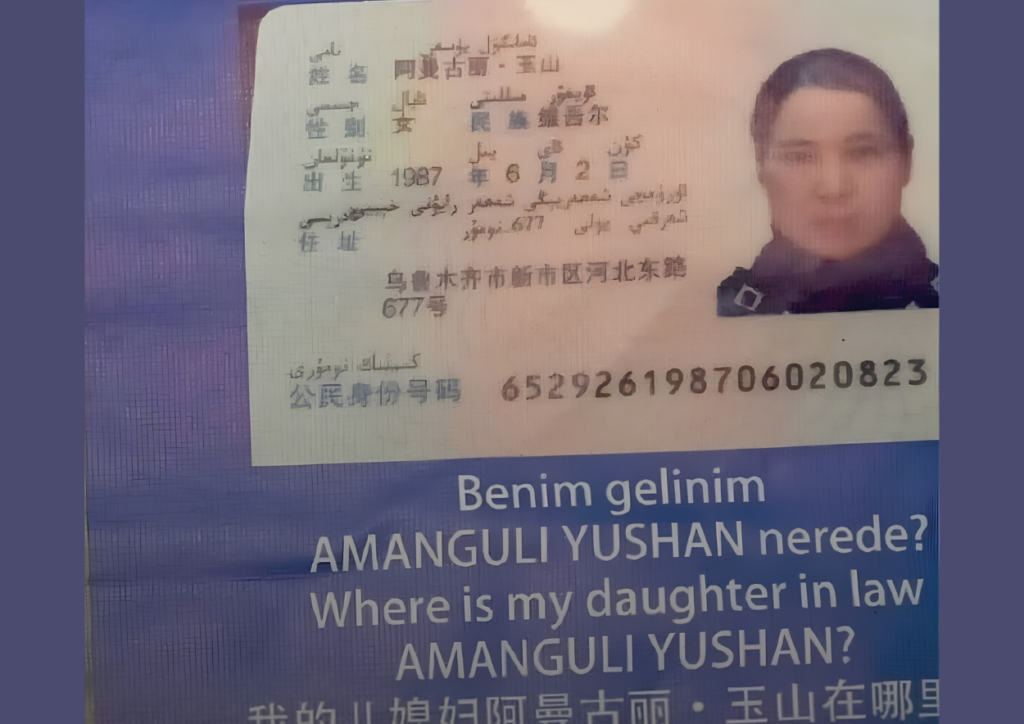
In 1986, Uyghur kebab vendor Abdulla Tomur rescued an abandoned Han Chinese baby outside a hospital in Guizhou. He and his wife adopted the baby, named her Zohregul and raised her as their daughter in a Uyghur Muslim family alongside their two sons. Forty years later, Abdulla is pleading from Istanbul for China to release his adopted daughter. According to Radio Free Asia, Zohregul, a Han Chinese woman raised in a Uyghur family, received a twelve-year prison sentence in Xinjiang. Police confirmed that her punishment was linked to her father’s travel to Turkey and her reading of religious materials authorities considered illegal. Her story raises troubling questions about the imprisonment of people over family connections and religious beliefs.
A Uyghur Family Chose Love Over Ancestry
Abdulla heard the baby crying after closing his market stall. Although poverty had already forced his family far from their hometown of Kucha, he carried her home, wrapped in a cloth.
His wife welcomed the infant and breastfed her. Their two sons quickly grew attached. A temporary arrangement became a lifelong bond.
“How could we hand over a child who called us ‘Dad’ and ‘Mom’?” Abdulla told RFA.
Zohregul grew up speaking Uyghur and practicing Islam. Her parents kept her ancestry private, fearing difficult reactions. Abdulla’s explanation was simple: every child is innocent and no child chooses their bloodline. That compassion stands in painful contrast to the state’s reported treatment of his family.
Travel and Religion Became Grounds for Punishment
Abdulla travelled to Istanbul in 2016 to visit his eldest son. Having previously experienced detention, he stayed after his son warned that returning could mean another arrest.
He later learned that Zohregul and his younger son, Rehim, were imprisoned. RFA’s September 2026 investigation obtained police confirmation that two family members were behind bars, including Zohregul. Her present conditions remain unknown.
The reported reasons fit a wider pattern. According to the BBC’s investigation into the Xinjiang Police Files, authorities detained people for ordinary religious behaviour, visits to Muslim-majority countries and relatives’ supposed offenses. Such practices replace individual responsibility with guilt by association.
A Father’s Appeal Met Requests for Intelligence
Since 2020, Abdulla has protested, given interviews and searched for answers. He eventually offered to return to China even accept imprisonment if authorities would release his daughter.
After his appeal spread online, four callers claiming official roles contacted him. Abdulla says their conversations turned toward requests for information about Uyghurs in Syria and Afghanistan. Their identities were not all independently established.
Desperate, he disclosed Zohregul’s Han Chinese ancestry. An officer told him she had three years remaining but demanded that he return and “repent” before further discussion.
This is not a meaningful answer to a father seeking justice. It is another demand for submission.
International Reporting Challenges Beijing’s Claims
According to Associated Press reporting published by PBS, a leaked database showed religion and family ties driving detention decisions.
Reuters reported that leaked camp instructions addressed preventing escapes, secrecy and indoctrination, while noting it could not independently authenticate those documents.
The New York Times documented official instructions warning students that their behaviour could affect detained relatives’ release.
Meanwhile, Al Jazeera, carrying AP’s investigation, reported long prison terms in Konasheher county. These reports provide context, not separate verification of Zohregul’s case. China denies targeting ethnic or religious groups and defends its policies as counterterrorism.
Compassion Deserves Freedom, Not Collective Punishment
Abdulla’s story challenges prejudice as powerfully as it challenges repression. A Uyghur Muslim family gave an abandoned Chinese child love without demanding that she deny her origins.
Beijing should disclose Zohregul’s court records, permit independent scrutiny and end punishment based on relatives’ travel or peaceful belief.
Abdulla once opened a cardboard box and saved a life. China must now answer why that life remains behind prison walls, separated from the father who chose her when nobody else did.